Wireless safety interlocks will reduce wiring complexity and improve fault detection in woodworking machine safety. Engineers should plan for five major shifts: sensor standardization, cybersecurity integration, predictive diagnostics, simplified maintenance, and regulatory compliance updates.
- Wireless safety interlocks reduce the need for complex hardwired safety circuits, simplifying machine layout and service access.
- Engineers must verify that wireless systems meet the same performance levels as wired safety chains.
- Cybersecurity and network management become part of the safety maintenance schedule.
- Predictive diagnostics will shift maintenance from reactive repair to scheduled updates.
- Regulatory compliance will require documentation of wireless system performance and failure modes.
What Wireless Interlocks Change in Workshop Safety
Wireless safety interlocks replace wired sensors with radio-based detection of guard status and machine state. The change moves safety architecture from a physical wiring network to a digital communication layer. Engineers now manage both mechanical guard function and electronic signal integrity.
The shift affects how machines are designed, installed, and serviced. A guard no longer needs a physical wire to a safety relay. Instead, the guard transmits a status signal to a central unit. The central unit processes the signal and controls the machine drive.
This change brings several benefits. Wiring harnesses shrink or disappear. Machine interiors open up for tooling access. Fault isolation becomes faster because a software log can show which sensor dropped offline and when.
It also introduces new risks. A wireless link can degrade with distance, metal interference, or battery failure. A wired chain fails mechanically. A wireless system fails electrically and digitally. The failure modes differ, and the maintenance routine must reflect that.
How Wireless Systems Affect Machine Design and Layout
Machine designers have more freedom when safety guards do not require hardwired connections. The guard can be placed closer to the operator without routing a cable through the enclosure. This improves ergonomics and reduces pinch points.
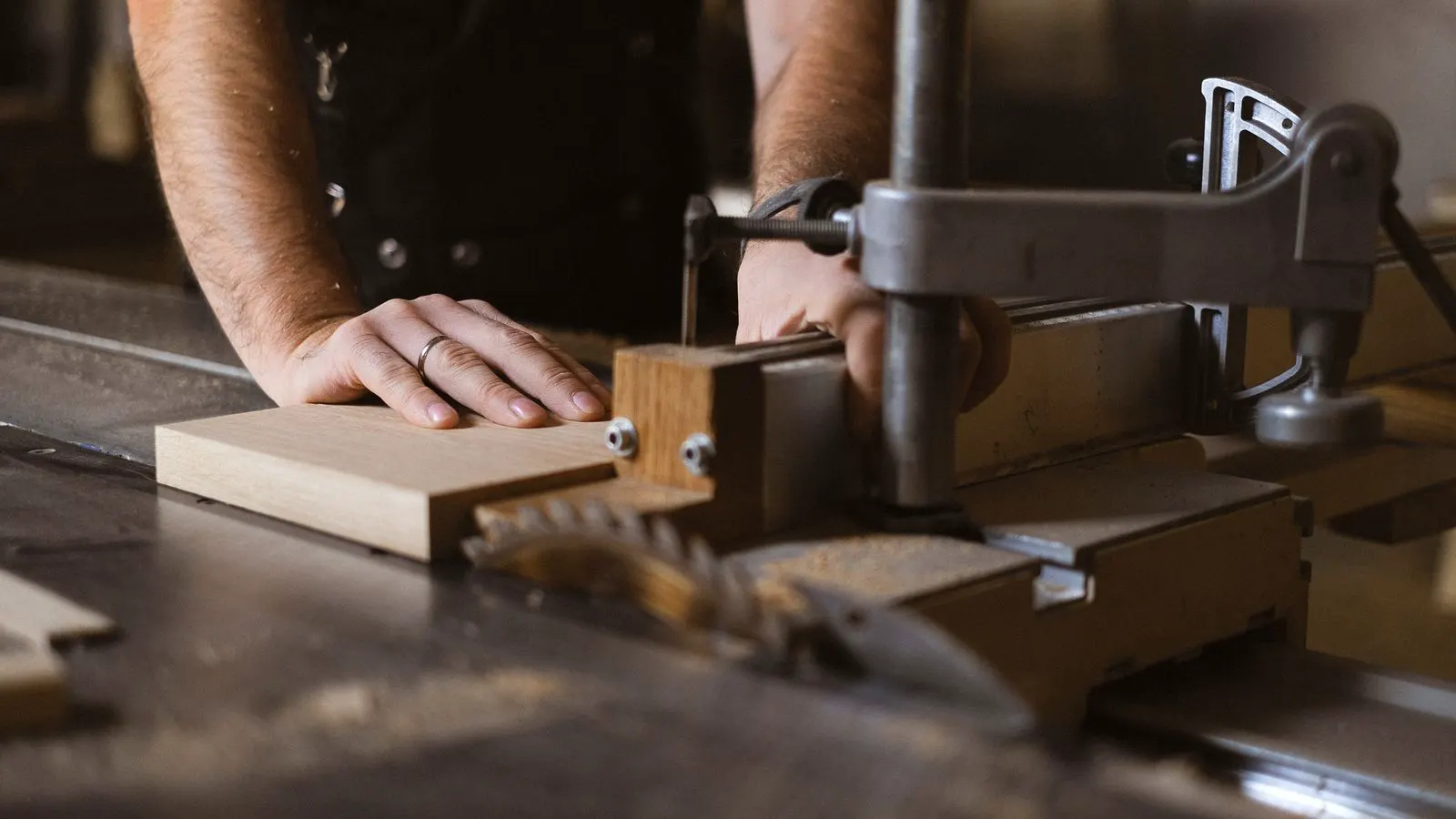
In panel saws and CNC routers, the guard often sits above the blade area or around the spindle. With wiring, the guard must have a channel or conduit to route the cable. With wireless, the guard can be a single unit that sits on the machine frame.
The control cabinet layout changes too. Fewer safety inputs mean fewer terminals to label and test. The central wireless unit handles the communication. Engineers can consolidate safety logic in one place instead of distributed across multiple relays.
This simplification has limits. The central unit must still handle redundancy. If one sensor fails, the machine must stop. The control logic must verify that all expected sensors are online before allowing operation. This requires firmware that checks signal quality, not just signal presence.
Designers must also consider the environment. Wood dust is conductive and abrasive. It settles on antennas and contacts. A wireless unit must be rated for the same dust and moisture levels as the wired sensors it replaces. The enclosure IP rating must match the machine environment.
What Engineers Must Verify for Regulatory Compliance
Regulatory compliance for wireless safety interlocks follows the same principle as wired systems: the safety function must perform reliably and predictably. The standard does not change based on the transmission method. The performance requirement remains.
Engineers must verify that the wireless system meets the required response time. When a guard opens, the machine must stop within a defined interval. The wireless system adds a transmission delay and a processing delay. These must be measured and documented.
The fail-safe behavior must be clear. If the signal is lost, the machine must stop. If the signal is corrupted, the machine must stop. The system must distinguish between a guard open state and a communication failure state. Both require a stop, but the maintenance response differs.
Documentation is more complex with wireless systems. Engineers must record the frequency band used, the antenna placement, the battery type, and the signal strength thresholds. They must also record the firmware version and the update history.
The compliance file must show that the wireless system has been tested in the actual installation environment. A test in a clean lab does not prove performance in a workshop with metal frames and other radio devices. The test must include the worst-case interference scenario for that specific machine location.
How Cybersecurity Becomes Part of Safety Maintenance
A wired safety chain is isolated from the network. A wireless safety chain is not. It uses radio frequency to transmit data. That data must be protected from tampering and interference.
Engineers must consider how the wireless protocol secures the data. Does it use encryption? Does it use authentication? Can an external device impersonate a guard sensor? The answer affects the system’s safety rating.
In a workshop, multiple machines may operate on the same frequency band. Interference from other equipment can cause false signals. Engineers must plan for frequency management. They may need to coordinate channel selection across the workshop to avoid overlap.
Cybersecurity also affects the update process. Firmware updates can introduce bugs. Engineers must have a process for testing updates in a controlled environment before deploying them to production machines. The update log becomes part of the safety documentation.
Maintenance staff must be trained on the new digital aspects. They need to know how to check signal strength, how to interpret diagnostic logs, and how to replace a failed sensor without compromising the safety chain.
Predictive Maintenance Changes the Service Schedule
Predictive maintenance in woodworking workshop safety extends to wireless systems. The system can monitor battery voltage, signal strength, and temperature. It can flag a sensor before it fails completely.
This changes the maintenance schedule. Instead of waiting for a guard to drop and the machine to stop, engineers can replace the battery when it reaches a low threshold. They can clean the antenna when signal strength drops below a set level.
The service log becomes richer. It records not just “replaced guard” but “replaced guard battery, signal strength was 72 percent, firmware version 2.4.1”. This history helps identify trends. If multiple sensors in one area show low signal, the issue may be environmental, not individual.
Engineers must define the thresholds for intervention. At what signal strength does a sensor need attention? At what battery voltage should it be replaced? These thresholds must be set based on the machine’s safety requirements and the expected service life.
The benefit is reduced downtime. A failed wireless sensor stops the machine. A scheduled battery replacement can be done during a planned shutdown. The cost of a battery is small. The cost of an unplanned stoppage is high.
How to Prepare Your Workshop for Wireless Safety Interlocks
Preparing for wireless safety interlocks requires a shift in mindset. Engineers must treat the safety system as both a mechanical and a digital asset. The preparation covers installation, maintenance, and documentation.
Start with a site survey. Identify the machine locations and the potential interference sources. Map the frequency bands already in use. Plan the antenna placement to ensure clear line of sight where possible.
Next, define the maintenance procedure. Create a checklist that includes digital checks. Verify signal strength, check battery levels, and review diagnostic logs. Train the maintenance staff on the new tools and procedures.
Finally, update the documentation. The machine manual must reflect the wireless system. The safety file must include the test records and the compliance evidence. The service history must capture the digital maintenance events.
The transition to wireless safety interlocks is not a one-time event. It is an ongoing adaptation. Engineers who plan for the shift will be ready when the technology matures. Those who treat it as a simple wiring change will face unexpected issues. The difference is in the preparation.
Summary Table of Wireless System Components
| Component | Function | Maintenance Focus |
|---|---|---|
| Guard Sensor | Detects guard open/closed state | Battery replacement, antenna cleaning |
| Central Unit | Processes signals and controls drive | Firmware updates, signal quality check |
| Antenna | Transmits and receives radio signals | Placement verification, interference check |
| Diagnostic Log | Records system status and faults | Review for trends, update history |
| Power Supply | Powers the wireless system | Voltage stability, connector integrity |
Final Considerations for Engineering Teams
The shift to wireless safety interlocks requires a balanced approach. The benefits are real: simpler installation, better fault isolation, and predictive capabilities. The risks are also real: new failure modes, cybersecurity concerns, and documentation complexity.
Engineers should evaluate each machine individually. Not every machine is suitable for a wireless system. Some environments have too much interference. Some safety functions require a physical connection that cannot be replaced. The decision must be based on the specific machine and location.
The path forward is incremental. Start with one machine. Test the system thoroughly. Document the results. Then expand to other machines as confidence grows. This approach reduces risk and builds internal competence.
The goal is not to replace wired systems with wireless ones. The goal is to improve safety performance and reduce maintenance burden. Wireless technology is a tool. Its value depends on how it is implemented and managed. Engineers who understand both the mechanical and digital aspects will get the most from it.
Frequently asked questions
Can wireless safety interlocks replace wired safety chains in all woodworking machines?
No. Wireless systems are suitable for many applications, but some machines have environments or safety requirements that make wired chains more reliable. Engineers must evaluate each machine individually.
What is the main difference in failure modes between wired and wireless interlocks?
Wired chains fail mechanically, usually through a broken wire or open contact. Wireless systems fail electrically or digitally, through signal loss, battery depletion, or interference. The diagnostic approach differs for each.
How does cybersecurity affect the safety of a wireless interlock system?
Cybersecurity affects the integrity of the safety signal. If an external device can impersonate a guard or corrupt the data, the safety function may not perform as intended. Engineers must verify the protocol includes authentication and encryption.
What documentation is required for regulatory compliance with wireless interlocks?
The same documentation as wired systems, plus records of the wireless configuration. This includes frequency band, antenna placement, signal strength thresholds, firmware version, and test results in the actual installation environment.
How should maintenance staff be trained for wireless safety interlocks?
Training should cover both the mechanical guard function and the digital diagnostics. Staff must know how to check signal strength, interpret diagnostic logs, and replace batteries without compromising the safety chain.