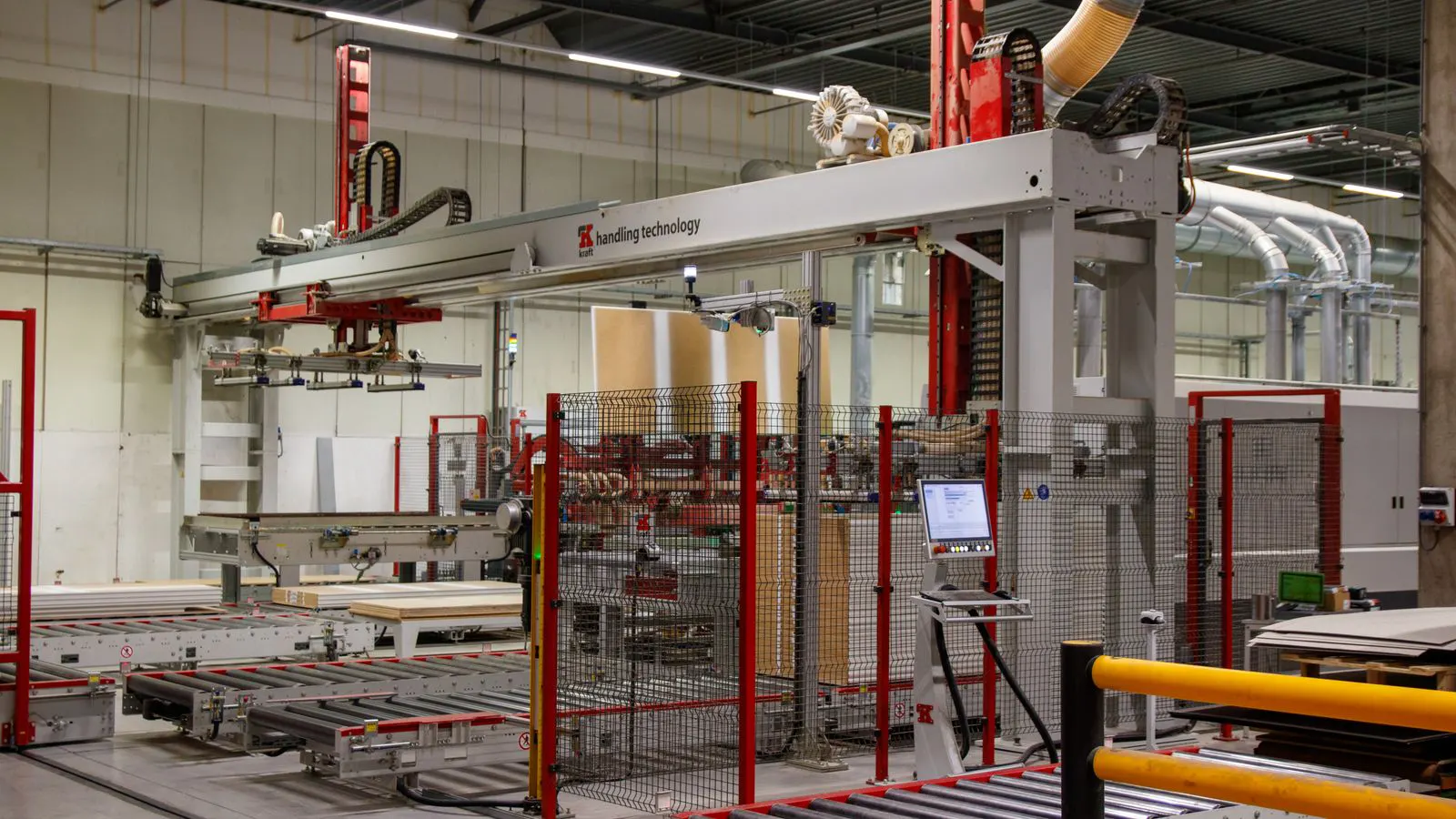
Woodworking CapEx covers the upfront cost of purchasing, installing, and commissioning new production equipment. It excludes daily running costs. Clear categorization helps finance teams approve budgets and compare new versus used asset values.
- CapEx includes machine purchase, installation, and commissioning, not operational running costs.
- Accurate CapEx classification prevents budget overruns and improves capital planning.
- Used machinery still counts as CapEx, but residual value affects net cost.
- Tracking CapEx separately from OpEx supports clearer ROI calculations.
What defines woodworking CapEx
CapEx stands for capital expenditure. In woodworking, it refers to the money spent to acquire, install, and bring production equipment online. It is distinct from operating expenditure, which covers labor, power, maintenance, and consumables.
A buyer purchasing a new CNC router spends money on the machine itself. That is CapEx. The same buyer also pays for the floor anchoring, electrical supply work, and initial calibration. Those costs are also CapEx. They are one-time, or near one-time, investments that create a long-term asset.
Finance teams need this distinction. Capital assets appear on the balance sheet. They are depreciated over time. Operating costs hit the income statement monthly. If a buyer mixes the two, the financial picture becomes distorted. A large machine purchase can look like an ordinary utility bill if categorized wrong.
How CapEx differs from OpEx in the shop
The line between CapEx and OpEx is usually drawn at the asset threshold. Most companies set a dollar amount. Anything above that amount is capitalized. Anything below is expensed as an operating cost.
Consider a shop that replaces a set of router bits. That is OpEx. The bits are consumables. They wear out. They are replaced regularly. The cost is small and recurring.
Now consider the shop buying a new spindle assembly for an existing machine. The cost is higher. The spindle extends the life of the machine. It may be classified as CapEx depending on local accounting rules. The key question is whether the item adds value to a fixed asset or merely maintains it.
This matters for sourcing decisions. If a part is treated as CapEx, it requires a capital approval process. That process is slower. It involves budget allocation, board review, and sometimes external financing. If it is treated as OpEx, the purchasing manager can often approve it directly.
Buyers should not assume that every upgrade is CapEx. A software license for the CAM system is often OpEx. A new machine is CapEx. The classification depends on the nature of the item and the company policy.
What costs belong in the CapEx bucket
A full CapEx figure for a woodworking machine is more than the sticker price. It includes all costs required to get the machine into productive service.
The table below lists typical items.
| Cost Category | Description |
|---|---|
| Machine Purchase | The base price of the equipment from the vendor. |
| Shipping and Logistics | Freight, insurance, and customs duties if importing. |
| Installation and Setup | Floor preparation, anchoring, and physical placement. |
| Electrical and Mechanical Works | Dedicated circuits, compressed air lines, and safety interlocks. |
| Commissioning and Training | Initial calibration, operator training, and software setup. |
| Initial Tooling and Fixtures | The first set of clamps, jigs, and cutters needed for production. |
These costs are often underestimated. A buyer may budget for the machine but forget the electrical work. A small router may need a standard outlet. A large milling machine may require a three-phase supply. The difference in cost can be significant.
Also consider the lead time. Installation and commissioning happen after the machine arrives. The capital is tied up during this period. The machine is not generating revenue yet. This delay affects the payback period.
Why CapEx matters for sourcing decisions
Knowing the true CapEx changes how a buyer compares options. A cheaper used machine may have a lower purchase price. But it may require immediate repair work. That repair cost is CapEx. It must be added to the total.
A new machine may cost more upfront. It may include a longer warranty and lower initial maintenance. The CapEx is higher, but the operating costs may be lower over the life of the asset.
Finance teams look at the total cost of ownership. CapEx is the first number in that equation. If the CapEx is wrong, the whole model is wrong. A buyer who excludes the installation cost will overestimate the return on investment.
This is also where the distinction between new and used equipment becomes clear. Used machinery often carries hidden CapEx. Inspection costs, refurbishment, and potential component failures are all capital costs. A new machine has a predictable price. A used machine has a variable price. The variance is part of the CapEx risk.
A worked example in plain words
Imagine a shop buying a medium-sized CNC panel saw. The vendor quotes a price for the machine. That is the first line item.
The shop then hires a contractor to pour a concrete pad. The floor in the workshop is wood subfloor. The saw is heavy. It needs a solid base to prevent vibration. The concrete work is CapEx.
The electrical contractor runs a new circuit from the main panel. The old circuit is not rated for the saw. This is CapEx.
The vendor’s technician arrives to calibrate the saw. They set the blade height and adjust the fence. This service is part of the purchase or a separate fee. Either way, it is CapEx.
The shop buys a set of guide rails and a dust collection hose. These are needed for day one. They are CapEx.
The shop does not include the cost of the plywood it will cut. That is inventory. It is not CapEx. It is an operating cost.
The total CapEx is the sum of the machine, the concrete, the electrical work, the calibration, and the initial tooling. This number goes to finance. It is the amount that will be depreciated over the life of the saw.
How CapEx interacts with ROI metrics
ROI metrics like payback period and internal rate of return rely on accurate CapEx. The payback period is calculated by dividing the total investment by the annual net cash flow. If the investment number is too low, the payback period looks shorter than it is.
A buyer who forgets the installation cost may think the machine pays for itself in three years. In reality, it takes four. That difference changes the decision.
The internal rate of return is more sensitive. It accounts for the time value of money. A higher CapEx reduces the IRR. A lower CapEx increases it.
Buyers should track CapEx separately in their financial systems. This allows them to see the trend. Are they spending more on capital assets? Is the mix shifting from large machines to smaller tools? This data helps with long-term planning.
It also helps with tax planning. Depreciation schedules vary by asset type. A machine that is capitalized can be depreciated. An operating expense is fully deductible in the year it is spent. The tax implications differ.
Common mistakes in CapEx categorization
The most common mistake is underestimating the total cost. Buyers focus on the machine price. They forget the ancillary costs. The result is a budget overrun.
Another mistake is capitalizing small items. A shop may buy a new clamp set for a large machine. If the clamp set is below the asset threshold, it should be OpEx. Capitalizing it inflates the asset value. It distorts the balance sheet.
A third mistake is ignoring the lead time. The machine is paid for, but it is not in service for two weeks. During that time, no revenue is generated. The effective cost per day of production is higher.
Buyers should create a standard CapEx checklist. Include the machine, the site preparation, the utilities, the commissioning, and the initial tooling. Use it for every purchase. It ensures consistency.
It also helps with vendor negotiations. When the buyer knows the full scope of CapEx, they can ask the vendor to include installation and training in the quote. This simplifies the budgeting process.
The final step is to review the CapEx after the project is complete. Compare the actual spend to the budget. Identify the variances. Learn from them. The next machine purchase will be more accurate.
The goal is not to minimize CapEx. The goal is to make it predictable. Predictable costs allow for better planning. They allow for better financing. They allow for better decisions.
A clear understanding of woodworking CapEx turns a complex financial process into a manageable one. It gives buyers the confidence to invest in the right equipment. It gives finance teams the clarity they need to approve the budget. It gives the shop the foundation for long-term growth.
Frequently asked questions
Does shipping a used machine count as CapEx?
Yes. Shipping, insurance, and customs duties are part of the capital cost required to bring the asset into service. They are added to the purchase price for financial reporting.
Can software updates be classified as CapEx?
Usually no. Standard software updates are operating expenses. Major upgrades that significantly enhance the machine's capability or extend its useful life may be capitalized.
How does CapEx differ from the cost of raw materials?
Raw materials like lumber and veneer are inventory and operating expenses. They are consumed in production. CapEx is spent on fixed assets that are not consumed.
Is the cost of operator training part of CapEx?
Yes, if the training is required for the initial commissioning and operation of the new machine. It is a one-time cost tied to the asset.
Can I capitalize a repair that fixes a broken part?
Generally no. Repairs maintain the existing asset. They are operating expenses. Capitalization is for items that add value or extend the life of the asset significantly.