An automatic edge bander handles high-volume, consistent runs with less labor. A manual edge bander suits low-volume, mixed materials, or tight budgets. Choose based on part count, material variety, and production pressure.
- Automatic edge banders reduce per-part labor and improve consistency on repetitive jobs.
- Manual edge banders offer flexibility for small batches, complex geometries, and mixed materials.
- Setup time and material changeover frequency are the main drivers behind the decision.
- A hybrid approach can work when a shop handles both high-volume flat parts and custom work.
- Labor cost, part complexity, and daily throughput should determine the choice, not marketing claims.
How to Decide Between Automatic and Manual Edge Banding
The choice between an automatic edge bander and a manual edge bander depends on three variables: part count per day, material mix, and labor cost. A shop running the same oak panel with a two-millimeter PVC band every day will benefit from automation. A cabinet shop that changes edge profiles weekly and works with veneer, laminate, and solid wood will likely do better with manual control.
The decision is not about which machine is “better.” It is about where the operation sits on a spectrum. High volume and low variation favor automation. Low volume and high variation favor manual control. The rest of this comparison breaks down the trade-offs in practical terms.
Comparison Table
| Option | Best for | Limitations |
|---|---|---|
| Automatic edge bander | High-volume production runs, repetitive part shapes, tight tolerances | Higher upfront cost, longer changeover time, less flexibility for odd geometries |
| Manual edge bander | Small batches, mixed materials, custom furniture, tight shop space | Higher labor cost per part, greater operator skill dependency, slower throughput |
| Semi-automatic edge bander | Mid-size shops with moderate volume and some material variation | Requires operator involvement for setup, less consistent than fully automatic units |
| Continuous edge bander | Very large panels, flat sheets, consistent edge profiles | Bulky footprint, limited to flat work, expensive installation |
| Hand-applied edge banding | One-off pieces, repair work, small prototype runs | Slow, inconsistent, high labor cost, not suitable for production |
When an Automatic Edge Bander Makes Sense
An automatic edge bander works when the operation is predictable. The machine takes a panel, clamps it, feeds it through trim, adhesive, press, and sanding stations in a single pass. The operator loads the panel, sets the program or adjusts the profile, and moves on.
The main advantage is consistency. Every panel gets the same adhesive thickness, the same pressure, and the same trim length. This matters when the edge banding feeds into a next process such as drilling, assembly, or final sanding. Inconsistent edges cause fit-up problems downstream.
The main cost is changeover. Switching from a 10-millimeter PVC band to a 2-millimeter veneer strip requires adjusting the trim tool, the adhesive applicator, the press pressure, and the sanding wheels. That changeover takes minutes to tens of minutes depending on the machine. If a shop changes bands more than a few times per shift, the automatic advantage shrinks.
Another factor is labor. A fully automatic edge bander can run without a dedicated operator at every station. One person can manage loading, unloading, and quality checks. In a labor-constrained environment, that saved headcount can offset the machine cost over time.
Automatic edge banders also handle large volumes more predictably. A shop producing hundreds of identical drawer fronts or table panels will see the per-part cost drop as run length increases. The machine does not tire, does not drift, and does not need breaks.
When a Manual Edge Band Is Better
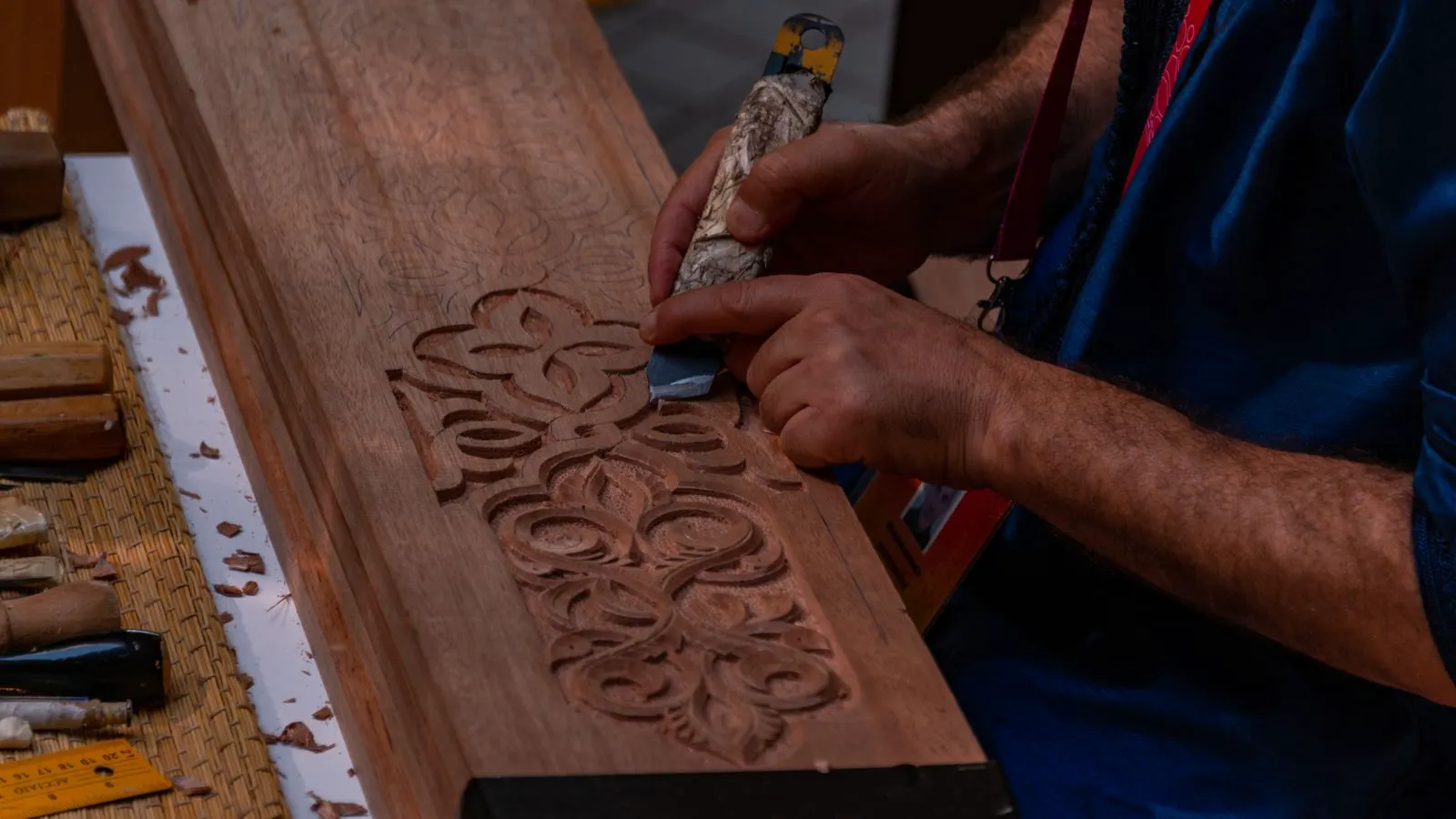
A manual edge band is the right choice when the work is varied. A custom cabinet maker may need to edge a door with a curved profile, a drawer with a mitered corner, and a countertop with a bullnose. An automatic edge bander can handle many of these, but the setup and tooling cost may not be justified for a few pieces per week.
Manual control also helps with mixed materials. Veneer, laminate, solid wood, and plastic bands each require different adhesive types, press pressures, and trim settings. A manual edge bander lets the operator adjust these settings by hand without reprogramming a controller.
Space is another factor. A manual edge bander is smaller. It fits in a corner of a small shop or a single bay in a larger facility. An automatic unit with its full line of trim, adhesive, and sanding stations takes more floor area and requires more clearance for material handling.
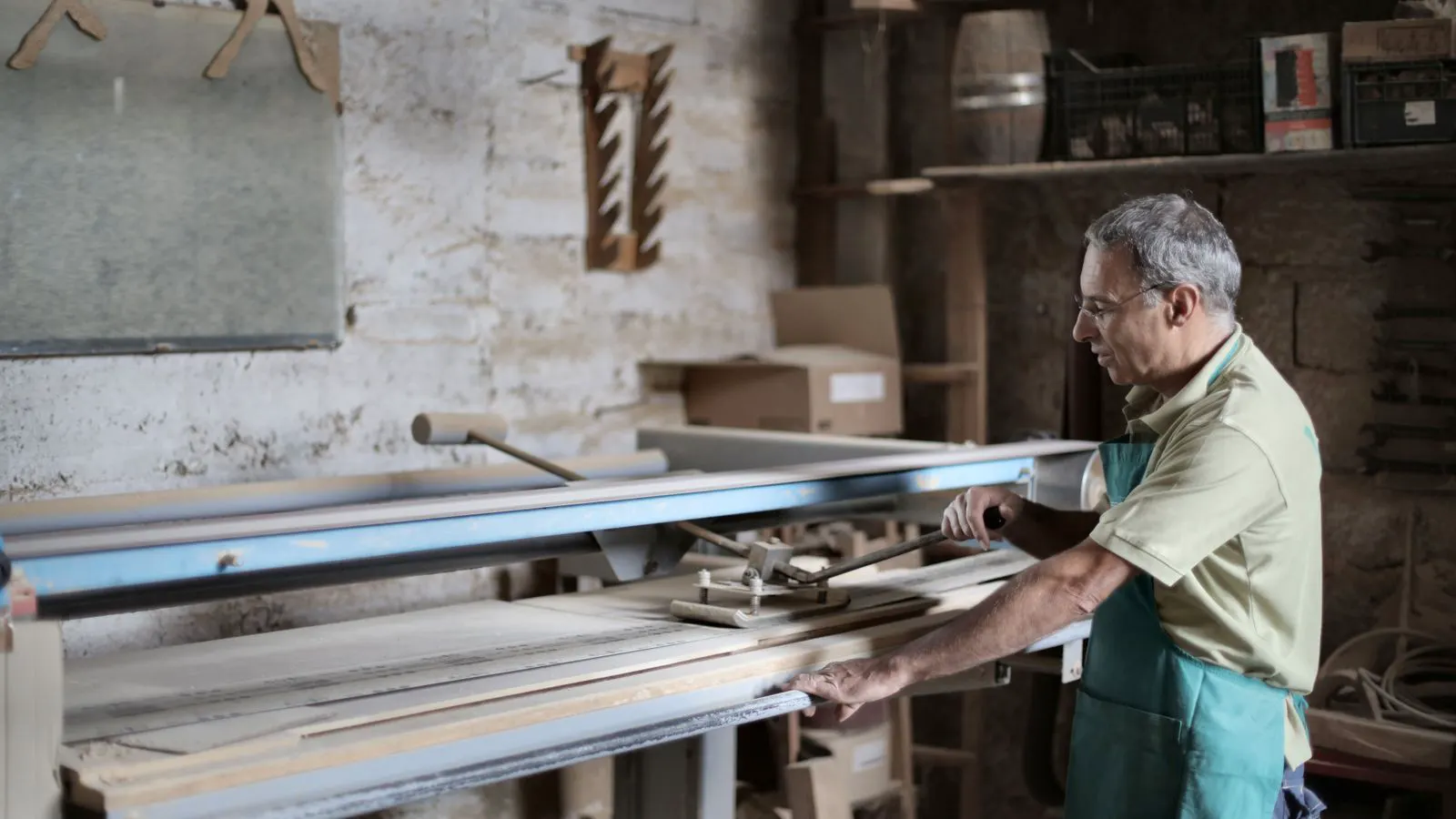
The labor trade-off is the main downside. A manual edge bander requires an operator to feed each panel, apply pressure, and check the trim. For a low-volume job, that is acceptable. For a high-volume run, the labor cost per part becomes significant.
Changeover and Setup Time
Changeover is the single biggest factor in the decision. Count how many times a shift changes edge material, profile, or adhesive type. If the answer is one or two, the automatic unit’s longer setup is easy to absorb. If the answer is five or more, the manual unit’s shorter setup time matters more.
An automatic edge bander typically has a digital controller for trim length, band width, and pressure. Some units store multiple profiles. The operator selects a stored program and makes fine adjustments. The changeover is fast but still takes time.
A manual edge bander has no controller. The operator sets the trim tool, the adhesive spreader, and the press by hand. The setup is quicker in minutes, but it depends on the operator’s familiarity with the machine.
A practical test: run a typical week of orders. List every edge band change. Multiply the changeover time by the number of changes. Compare the total downtime against the labor saved by automation. The numbers usually make the decision clear.
Quality Control and Operator Skill
A fully automatic edge bander produces a consistent edge if the material is clean and the setup is correct. The machine does the trimming, pressing, and sanding in a fixed sequence. The operator’s job is to catch problems: a band that is too short, a glue line that is too thick, a panel that is warped.
A manual edge bander depends more on the operator. The operator controls the feed rate, the pressure, and the trim. A skilled operator can produce edges that are as clean as any automatic machine. An inexperienced operator will leave glue squeeze-out, uneven trim, or poor adhesion.
For quality control, both machines benefit from a post-banding sanding system. A sanding station after the edge bander removes glue squeeze-out, smooths the trim, and prepares the edge for finishing. The sanding system is more critical for manual work because the operator’s trim is less precise.
A shop that uses a manual edge bander should train its operator on adhesive application and pressure control. A shop that uses an automatic edge bander should train its operator on setup, material inspection, and troubleshooting.
Cost and Throughput
The cost comparison has two parts: capital and operating. An automatic edge bander costs more upfront. A manual edge bander costs less. The operating cost depends on labor, changeover, and throughput.
For a low-volume shop, the manual edge bander is cheaper to run. The operator’s time is already part of the labor cost. Adding a small manual edge bander does not change the labor budget much.
For a high-volume shop, the automatic edge bander reduces the labor cost per part. The operator can manage multiple stations. The changeover time is amortized over hundreds of parts. The capital cost is offset over time.
A rough rule of thumb: if the shop produces more than a few hundred edge-banded parts per day, automation starts to pay off. If the shop produces fewer than that, the manual unit is usually more economical. The exact break-even point depends on local labor rates, part complexity, and the number of changeovers per shift.
Space, Footprint, and Integration
An automatic edge bander needs floor space for the machine, material staging, and sometimes a separate sanding or adhesive station. It may also require a power connection and a compressed air line. A manual edge bander is compact and can sit next to a workbench.
Integration with other equipment matters. If the shop already has a CNC router that cuts panels to size, an automatic edge bander can take the panels directly from the CNC. The panels move from the CNC table to the edge bander in a fixed path. This reduces handling and setup.
A manual edge bander integrates more easily into a flexible shop. The operator can feed panels from multiple sources: a saw, a CNC, a veneer press, or a hand-cut stack. The machine does not require a fixed material flow.
Footprint also affects workflow. In a small shop, a large automatic edge bander can block traffic. A manual unit can be placed in a corner without disrupting the main work area.
Hybrid Approaches
Some shops run both a manual and an automatic edge bander. The automatic unit handles the high-volume, repetitive parts. The manual unit handles the custom work. This split keeps the production line moving and avoids the changeover penalty.
A hybrid setup is common in mid-size furniture factories. The main production line runs the standard doors and panels through the automatic edge bander. The custom line uses the manual unit for special profiles, veneers, and one-off pieces.
The hybrid approach requires two sets of operators or a small team that can work both machines. It also requires a clear rule for which parts go to which machine. If the rule is unclear, operators will route parts to the wrong station and the line will slow down.
A hybrid setup is also useful during growth. A shop that starts with a manual edge bander can add an automatic unit when volume justifies it. The manual unit continues to handle the tail end of the product mix.
Final Selection Criteria
Pick an automatic edge bander when the operation has high volume, low material variation, and a fixed production schedule. The machine will save labor and improve consistency. The operator will spend more time on setup and quality checks than on feeding each panel.
Pick a manual edge bander when the operation has low volume, high material variation, and tight space. The machine will be more flexible and easier to operate. The operator will spend more time on each panel, but the labor cost is acceptable for the work mix.
Before buying, run a two-week trial with sample parts. Test the changeover process. Measure the time from one band type to the next. Check the glue coverage and trim quality. Walk the floor with the material flow in mind. The numbers and the workflow will make the choice obvious.
Frequently asked questions
Can a manual edge bander handle veneer edge banding?
Yes. A manual edge bander is often the better choice for veneer because the operator can adjust pressure and adhesive application for thin, delicate materials.
How much floor space does an automatic edge bander need?
It depends on the machine configuration, but expect at least enough room for the trim, adhesive, press, and sanding stations plus material staging on both sides.
Is an automatic edge bander worth it for a small shop?
Usually not. Small shops with low volume and high variation do better with a manual edge bander. Automation pays off when part count is high and changeovers are few.
Can an automatic edge bander handle mitered corners?
Some automatic units can handle mitered corners, but the setup is more complex. A manual edge bander gives the operator more control over mitered work.
What is the main risk of buying an automatic edge bander?
The main risk is changeover downtime. If the shop changes edge materials or profiles frequently, the automatic unit's longer setup time will reduce its productivity advantage.