Edge adhesive is the material that bonds edge banding to panel edges. This article defines the main types, explains how each affects surface finishing and panel edge outcomes, and shows how application methods influence the final result for professional buyers and engineers.
- Edge adhesive selection depends on panel material, edge banding type, and required surface finishing quality.
- Hot melt adhesives offer fast drying and strong initial bonding, while cold glues provide longer open time for alignment.
- Application method, including temperature and pressure, directly affects panel edge quality and long-term durability.
- Compatibility testing and machine settings must be verified before moving from sample to production.
- Choosing the wrong adhesive can cause delamination, visible gaps, or poor surface finishing on finished panels.
What defines edge adhesive in panel work
Edge adhesive is the bonding material applied between the panel edge and the edge banding strip. It holds the banding in place during the initial cure period and creates the structural joint that resists mechanical stress, moisture, and temperature changes. The adhesive is not just a filler. It determines how well the panel edge holds under load and how clean the finished surface appears after trimming and finishing.
In a typical panel line, the adhesive is applied to the panel edge just before the banding is pressed into place. The edge banding is then heated, trimmed, sanded, and finished. If the adhesive does not bond properly, the joint may open at the corners, show a dark line, or fail under repeated stress. Engineers and buyers must understand the adhesive properties before selecting a machine and banding material.
The choice of edge adhesive affects sourcing decisions because the adhesive must match the machine settings, the panel substrate, and the required finish. A hot melt adhesive that works on MDF may fail on a veneered particle board panel. A cold glue that allows careful alignment may not dry fast enough for a high speed continuous line.
How hot melt edge adhesive affects surface finishing
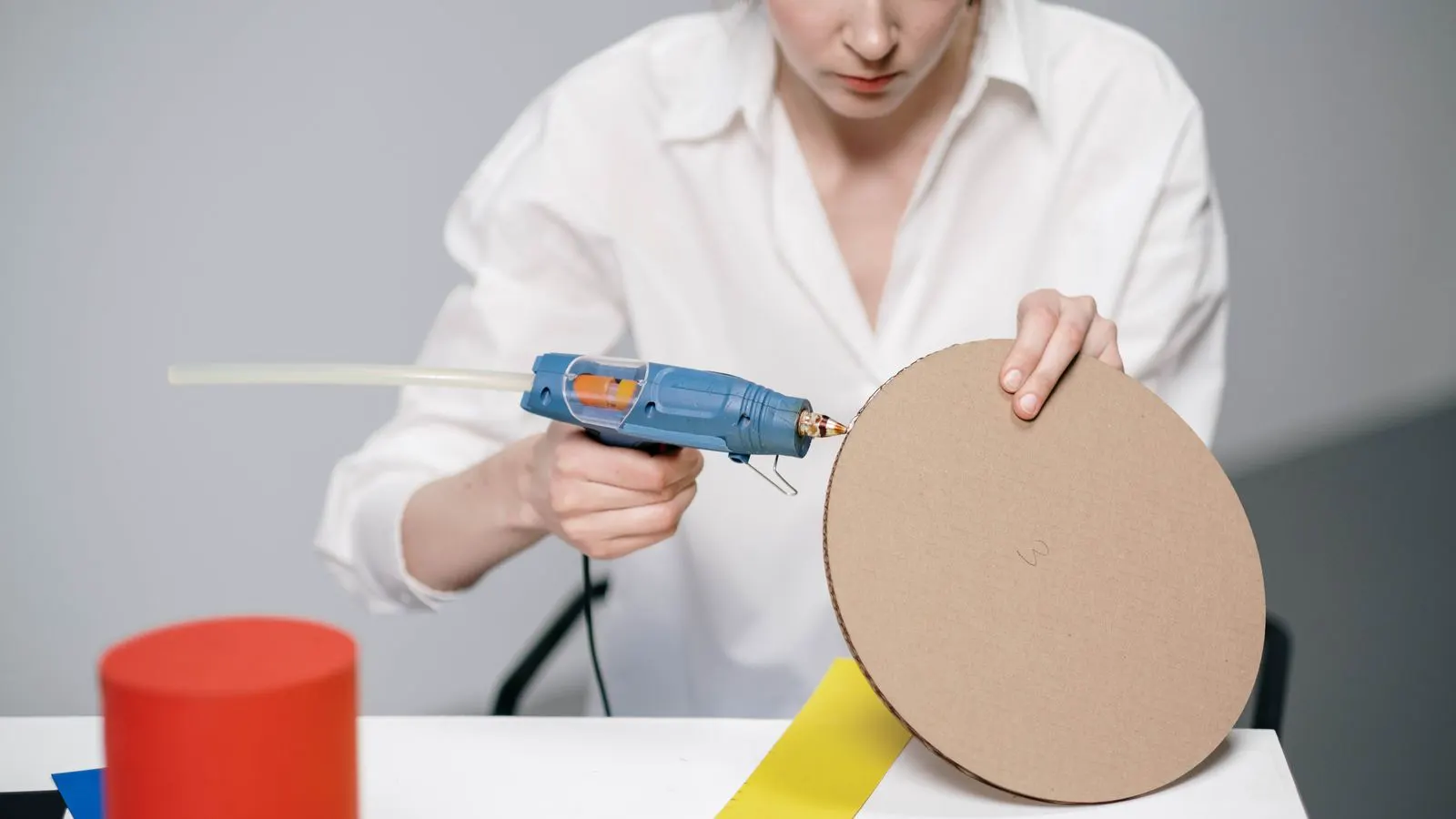
Hot melt edge adhesive is a thermoplastic material heated to a liquid state before application. It cools and hardens quickly, often within seconds. This fast cure time suits high speed production lines where panels move continuously through the edge banding machine.
The fast set time is a double edged benefit. It helps hold the banding in place immediately, which reduces movement during trimming. However, the short open time means the operator has less room for correction. If the banding shifts during the initial seconds, the adhesive may lock in the error.
For surface finishing, hot melt adhesives usually provide a clean, tight joint when the machine is set correctly. The adhesive layer is thin, which helps keep the panel edge flat and uniform. This is especially useful when the final finish is a lacquer or varnish coat. A thin, well bonded joint allows the finish to flow evenly over the panel edge.
The main risk with hot melt adhesive is temperature control. If the adhesive is too hot, it can burn the banding or create a dark line at the panel edge. If it is too cool, the bond may be weak or incomplete. Machine settings must be adjusted for the specific adhesive type and banding material.
How cold glue and pressure sensitive edge adhesive differ
Cold glue edge adhesive is a water based or solvent based adhesive that cures through chemical reaction or evaporation. It does not require heating to apply. The open time is longer than hot melt, which gives the operator more control over banding placement.
This longer open time is useful in batch processing or when the edge banding is thick, uneven, or difficult to align. The adhesive can be applied with a brush, roller, or spray, depending on the machine design. The operator can adjust the banding position before the adhesive begins to set.
For surface finishing, cold glue can produce a strong joint, but the cure time affects the process. Panels may need to rest before sanding or finishing. If the adhesive is not fully cured, sanding can pull the banding loose. The adhesive film may also be thicker than hot melt, which can affect the flatness of the panel edge.
Pressure sensitive edge adhesive is a self adhesive banding material that already contains the adhesive on the back. It is often used with heated pressure banding machines. The adhesive is activated by heat and pressure, not by a separate application step.
This method reduces application errors because there is no liquid adhesive to spread unevenly. The panel edge and banding are heated together, and the adhesive bonds as the parts are pressed. The result is often a very clean joint with minimal waste. For surface finishing, pressure sensitive banding can produce a uniform edge, but the adhesive layer thickness must be controlled to avoid visible gaps.
How application method changes the final panel edge
The application method is as important as the adhesive type. The same edge adhesive can produce different results depending on how it is applied and how the banding is pressed.
In a continuous edge banding machine, the adhesive is applied by a heated roller or a heated applicator plate. The panel edge passes through a narrow gap, and the banding is fed from a roll. The adhesive is heated to a set temperature, and the banding is pressed against the panel edge by rollers. The pressure and temperature must be matched to the adhesive and banding material.
A common mistake is using the same settings for all panel types. An engineered wood panel with a dense surface may need higher pressure than a softer substrate. A thicker banding strip may need more heat than a thin veneer. If the settings are wrong, the panel edge may show a gap at the corner, a lifted band, or a dark adhesive line.
In a batch edge banding machine, the adhesive is applied to a fixed panel edge, and the banding is placed by hand or by a mechanical arm. The operator has more control, but the process is slower. This method is often used for special panels, small batches, or panels with irregular shapes. The adhesive open time is critical here. If the adhesive sets too quickly, the banding may not be positioned correctly. If it sets too slowly, the banding may shift during pressing.
How adhesive choice affects sourcing and machine setup
The edge adhesive selection must be made before the edge banding machine is finalized. The adhesive determines the machine configuration. A hot melt system needs a heated applicator and a fast cycle time. A cold glue system may need a different applicator and a longer cure area. A pressure sensitive system may not need a separate adhesive applicator at all.
Buyers must ask for adhesive compatibility data from the adhesive supplier and the banding manufacturer. The data should cover the panel substrate, the banding material, the required temperature range, and the pressure settings. Without this data, the machine may not be suitable for the intended production.
The adhesive also affects the surface finishing process. Some adhesives release solvents or moisture during cure, which can affect the finish. Some adhesives may not be compatible with certain coatings. A test panel should be run through the full process, including banding, trimming, sanding, and finishing, before a production decision is made.
A practical example makes the point clear. An engineer is selecting an edge banding machine for a panel line that uses particle board panels with a thin melamine laminate banding. The required finish is a high gloss lacquer. The engineer tests a hot melt adhesive and a pressure sensitive adhesive. The hot melt adhesive cures quickly and produces a tight joint, but the lacquer shows a slight haze at the panel edge because of residual adhesive. The pressure sensitive adhesive produces a cleaner joint and the lacquer cures evenly. The engineer chooses the pressure sensitive system because the surface finishing outcome is better, even though the initial adhesive cost is higher.
How to verify edge adhesive compatibility
Verification is not optional. It is the step that separates a working line from a recurring delamination problem. The engineer should test the adhesive with the exact panel material and banding material that will be used in production.
The test should include the full edge banding process. Apply the adhesive, press the banding, trim the edge, sand the edge, and apply the finish. Check the joint for gaps, lifting, and dark lines. Apply mechanical stress to the panel edge to see if the bond holds. Expose the test panel to a temperature cycle or a moisture cycle if the final use environment will have those conditions.
The machine settings must be recorded during the test. Temperature, pressure, speed, and adhesive amount are all variables. If the test works, the settings must be documented and controlled in production. If the settings change, the result may change.
A common failure mode is using a new adhesive without retesting the machine settings. An adhesive supplier may change the formula, and the previous settings may no longer be correct. The engineer should keep a log of adhesive batches and machine settings. If a delamination problem appears, the log helps identify the change that caused it.
How edge adhesive relates to surface finishing quality
The quality of the surface finish on a panel edge depends on the joint quality. A clean joint allows the finish to flow evenly and cure uniformly. A poor joint creates a surface defect that no amount of finishing can fully hide.
The adhesive layer thickness is a key factor. A thick layer can create a step at the panel edge, which shows up as a line in the finish. A thin layer can create a gap if the pressure is not enough. The adhesive must be applied in a controlled amount.
The panel edge must be straight and clean before adhesive application. If the edge has burrs, dust, or old adhesive, the bond will be weak. The edge should be sanded or milled to a smooth surface. The adhesive must bond to the substrate, not to dust or debris.
The final finish must be compatible with the adhesive. Some adhesives release compounds that react with certain coatings. The finish may peel, yellow, or fail to cure. The engineer should test the finish on a bonded panel edge before approving the production process.
How to choose the right edge adhesive
The right edge adhesive is the one that matches the production process and the finish requirement. There is no single best adhesive. The choice depends on the panel material, the banding material, the production speed, and the required finish.
For high speed continuous lines, a hot melt adhesive is often the default. It cures fast and suits the machine cycle. For batch lines or complex panels, a cold glue may offer more control. For high quality finishes, a pressure sensitive adhesive may produce a cleaner joint.
The engineer should start with the finish requirement. If the final finish is a high gloss lacquer, the adhesive must not cause haze or lifting. If the final finish is a paint coat, the adhesive must allow the paint to bond and cure. The adhesive choice should be made after the finish is defined, not before.
The machine must be selected to support the chosen adhesive. A machine designed for hot melt may not be suitable for cold glue without modification. A machine designed for pressure sensitive banding may not allow the same pressure settings as a hot melt system. The adhesive and the machine must be chosen together.
The final decision should be based on test results. Run the full process on the exact materials. Check the joint, the surface finish, and the mechanical performance. Record the settings. Verify the adhesive compatibility with the panel and the banding. Only then can the production line be approved.
The edge adhesive is a small part of the edge banding process, but it controls the outcome. A well chosen adhesive creates a strong, clean joint that supports the surface finishing and the long term performance of the panel. A poorly chosen adhesive creates problems that appear at the end of the line, where they are expensive to fix.
Frequently asked questions
What is the main difference between hot melt and cold glue edge adhesive?
Hot melt adhesive cures by cooling and is suited for fast continuous lines. Cold glue cures by chemical reaction or evaporation and provides more open time for alignment.
How does edge adhesive affect the final surface finish?
The adhesive layer thickness and cure behavior affect the flatness and cleanliness of the panel edge. A poor joint can cause haze, lines, or lifting in the final finish.
Can pressure sensitive edge banding be used with all panel materials?
No. The banding and adhesive must be compatible with the panel substrate. Dense, hard surfaces may need different pressure settings than softer or porous surfaces.
What should be tested before approving an edge adhesive for production?
Test the full process with the exact panel and banding materials. Check the joint for gaps, apply mechanical stress, and verify the finish cures correctly.
How do machine settings affect edge adhesive performance?
Temperature, pressure, and speed determine how the adhesive bonds. Incorrect settings can cause weak bonds, gaps, or visible defects at the panel edge.