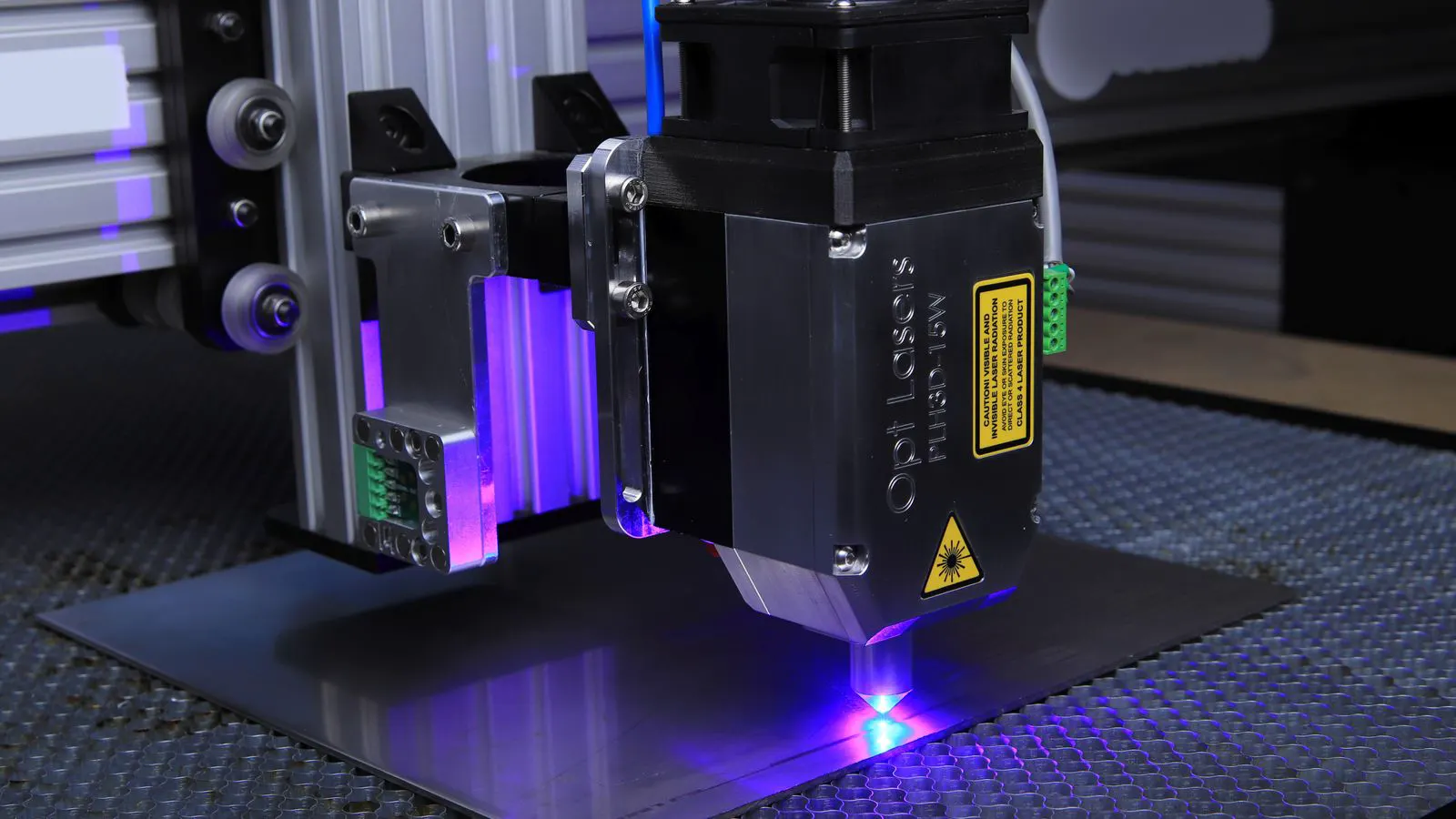
To calculate CNC router TCO, sum the purchase price with installation, energy, maintenance, labor, and disposal costs over a specific period. This total cost of ownership metric reveals the true financial impact and supports accurate ROI decisions for procurement managers.
- CNC router TCO includes purchase, installation, energy, maintenance, labor, and disposal costs over the machine's life.
- Use a fixed time horizon, such as five or seven years, to standardize comparisons between different machine options.
- Track machine operating cost separately to identify where energy or maintenance savings can offset a higher initial purchase price.
- Verify the final calculation by comparing the TCO against the expected revenue or cost reduction from the new machine.
Why Sticker Price Is Not Enough
A CNC router price tag covers only the hardware. It excludes the electricity consumed during operation, the time spent on maintenance, the cost of tooling replacement, and the labor required to operate the system. Procurement managers who compare machines based on initial cost alone often miss the real financial picture.
The total cost of ownership approach fixes this gap. It forces you to look at the full financial footprint of the machine from the moment it arrives on the floor until it is sold or scrapped. This method works best when you define a clear time horizon before you begin. Five years is a common choice for woodworking equipment, but seven years fits better for heavy-duty routers that see continuous production.
Step One: Define the Evaluation Period
Start by choosing a fixed number of years for the calculation. This period must be long enough to capture major maintenance cycles and short enough to remain relevant to current production plans. If you are planning a capital budget for the next fiscal year, use a shorter window. If you are comparing a new machine against a used one, align the period with the expected useful life of both options.
A consistent time frame is the foundation of every other step. Without it, comparing a five-year TCO against a seven-year TCO leads to false conclusions.
Step One: Estimate the Purchase Price
Record the final purchase price of the CNC router. This number must include the base machine cost, any required attachments, and the software licenses needed for operation. Do not include shipping if you plan to calculate that separately, but note where it belongs in your spreadsheet.
Many buyers forget to account for the cost of a control cabinet, a dust collection interface, or a specific spindle upgrade required for their material. List every line item that transfers to your facility.
Step Two: Add Installation and Setup Costs
Installation is where hidden costs appear most frequently. You need to estimate the cost of electrical work, floor reinforcement, and any necessary dust collection modifications. A CNC router draws significant power, and the existing electrical panel may need an upgrade.
Hire your electrician to provide a written estimate. Include the cost of a dedicated circuit if required. Do not assume that the existing infrastructure is ready for a new high-amperage machine.
Step Three: Calculate Energy Consumption
Energy is a major part of the machine operating cost. To estimate this, you need the power draw of the router in kilowatts and the expected annual operating hours. Multiply the power draw by the operating hours to get annual kilowatt-hours. Multiply that by your local electricity rate to get the annual energy cost.
For a router with a ten kilowatt spindle running for three thousand hours a year at a rate of ten cents per kilowatt-hour, the annual energy cost is thirty thousand dollars. This number changes based on your local utility rates and the specific work you run. Use actual shop data if you have it. If you are buying a new machine type, ask the vendor for typical power draw figures under normal load.
Step Four: Estimate Maintenance and Consumables
Maintenance includes routine tasks and major repairs. Break this into two categories: scheduled maintenance and unexpected repairs. Scheduled maintenance covers lubrication, belt checks, and software updates. Unexpected repairs cover spindle bearing failures, controller issues, and structural damage.
Create a list of consumables. This includes cutting tools, bits, and any materials needed for maintenance. A router that cuts hardwood daily will burn through bits faster than one that works with softwood or MDF. Estimate the annual cost of these consumables based on your production volume.
Step Five: Factor in Labor
The operator and the maintenance technician are part of the cost. Calculate the fully loaded cost of the labor. This includes wages, benefits, and any overtime that the new machine will require.
Sometimes a new CNC router reduces labor by allowing one operator to run multiple machines. In that case, the labor cost might go down, not up. Capture this change in your model. If the new machine requires a higher-skill operator, factor in the higher wage rate.
Step Six: Account for Disposal or Resale Value
At the end of your evaluation period, the machine will have a residual value. It may be sold, traded in, or scrapped. Estimate the resale value based on the machine’s condition and market demand for that specific type.
A well-maintained CNC router often retains more value than a poorly maintained one. This residual value reduces the total cost of ownership. Do not ignore this step, even if the machine is expected to be used for the full evaluation period.
Common Mistakes in CNC Router TCO Calculations
The most common error is ignoring installation. Buyers focus on the machine price and forget that the electrical work alone can add a significant amount to the total.
Another mistake is underestimating maintenance. New machines require less maintenance in year one, but costs rise as the machine ages. Using a flat rate for all years overstates the early savings and understates the later costs.
A third error is using the wrong time horizon. If you compare a machine that lasts ten years against one that lasts five years using a five-year window, you are not comparing like with like. Adjust the numbers so both machines are evaluated over the same period.
Verification Step: Compare TCO to Expected Returns
Once you have your total cost of ownership, compare it against the financial benefit. This could be increased production capacity, reduced labor costs, or improved product quality that allows you to charge a higher price.
If the TCO is higher than the expected returns, the machine is not a sound investment. If the TCO is lower, the investment is strong. This final check is what turns a spreadsheet into a decision.
Summary Table of TCO Components
| Cost Component | What to Include | Typical Frequency |
|---|---|---|
| Purchase Price | Machine, software, attachments | One-time |
| Installation | Electrical, floor, dust collection | One-time |
| Energy | Electricity for operation | Annual |
| Maintenance | Parts, labor, repairs | Annual |
| Labor | Operator and technician wages | Annual |
| Disposal | Resale value or scrap cost | End of period |
Final Thought
Calculating CNC router TCO is not about finding the cheapest machine. It is about finding the machine that delivers the best value over the period you actually need it. By breaking down each cost and verifying the numbers against your production goals, you remove the guesswork from procurement. The result is a defensible financial case that supports your budget request and aligns with the shop’s long-term strategy.
Frequently asked questions
What is the biggest part of CNC router TCO?
The purchase price is usually the largest single item, but energy and maintenance add up quickly over five to seven years. Labor costs can also be significant depending on your shop's staffing model.
How do I estimate energy costs for a new CNC router?
Find the power draw in kilowatts, multiply by expected annual operating hours, and then multiply by your local electricity rate. Use the vendor's typical power draw figures if you do not have shop data.
Should I include the cost of a used machine's remaining life or the full period?
Use the full evaluation period for consistency. If a used machine has a shorter expected life, adjust the residual value to reflect that shorter remaining life.
How often should I recalculate TCO?
Recalculate TCO when electricity rates change significantly, when you update maintenance records, or when you change the machine's operating schedule. Annual reviews are a good practice.
Does software licensing affect TCO?
Yes. Include all software licenses in the purchase price or list them as a recurring cost if they are annual subscriptions. This is part of the total cost of ownership.


