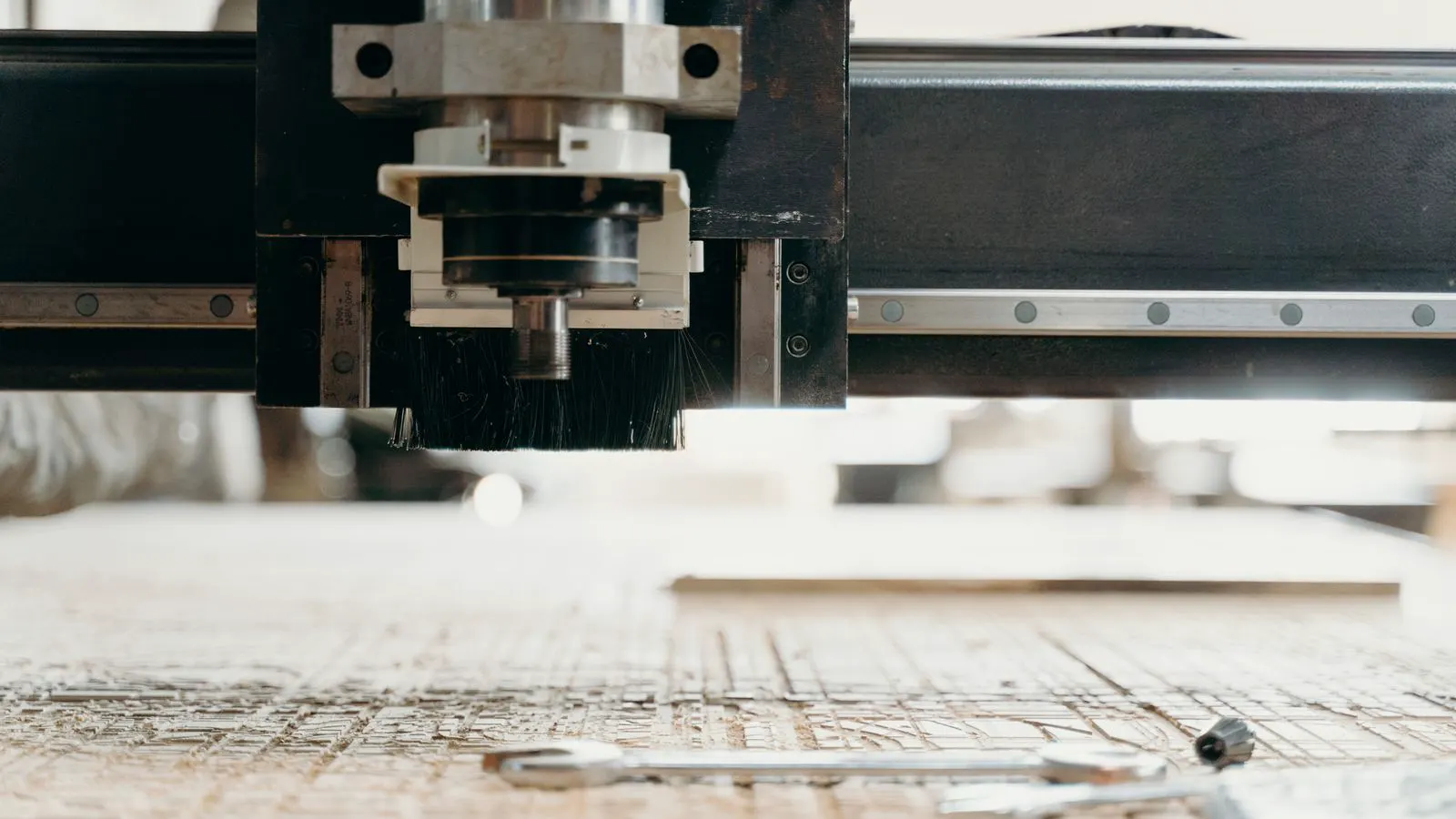
Current machinery trends affect equipment ROI by shifting costs from capital purchase toward energy, maintenance, and skilled labor. Buyers must adjust payback period calculations to account for these structural changes in total cost of ownership.
- Equipment ROI calculations now depend more on operational efficiency than initial capital price.
- Total cost of ownership must include energy, software, and specialized maintenance rather than just the machine price.
- Payback period analysis requires tracking labor savings and quality yields alongside direct material costs.
- Buyers should budget for training and integration time before expecting standard ROI timelines.
- Future-proofing through modular and connected machinery reduces long-term replacement costs.
How Current Trends Are Reshaping Your Cost Structure
The buying decision for woodworking machinery has moved away from a simple price comparison. You are no longer comparing two identical machines with different sticker prices. You are comparing different operating models. A traditional stand-alone router table and a modern CNC cell are not just different tools. They are different business functions. The machine price is now a smaller slice of your total investment. Energy consumption, software licensing, maintenance complexity, and operator training have grown in their share of the annual spend.
This shift happens because of several converging trends. Machines are more automated and connected. They consume more power per hour of operation, but they also produce more finished parts per hour. The net effect is a change in the unit economics. You buy less material waste, but you spend more on electricity, network infrastructure, and specialized service contracts. The initial capital outlay may remain stable or even drop due to competition in the entry-level segment, but the ongoing operational cost has risen.
For a buyer, this means the old rule of thumb no longer works. If you calculated your payback period based only on the difference in machine price and the value of the output, you will understate the true return. You need to model the full operating cost. The machine that costs more upfront may deliver a faster payback if it reduces labor hours and scrap rates. The cheaper machine may lock you into a higher cost per board foot if it requires more manual setup and produces more off-spec material.
What Has Changed in Total Cost of Ownership
Total cost of ownership has expanded beyond the purchase price and routine maintenance. It now includes the cost of data management, cybersecurity, and operator capability. A connected CNC router is not just a saw. It is a node in a digital supply chain. You pay for the machine, but you also pay for the software that controls it, the network upgrades needed to support it, and the training to keep it running safely and efficiently.
Consider the maintenance side. A basic manual table saw requires a blade, a belt, and a dust filter. A CNC machine requires spindle bearings, linear rails, ball screws, servos, encoders, and a control cabinet. The failure modes are different. When a CNC machine fails, the downtime cost is much higher. You have a full production line stopped, a software environment to diagnose, and a specialized technician to call. The annual service contract for a connected machine is often a significant percentage of the purchase price. This is a recurring cost that must be in your model.
Energy costs are another major variable. Modern machines are more efficient per part, but they run longer. A CNC cell can run overnight with minimal supervision. This changes your energy bill from a variable cost tied to shop hours into a fixed cost tied to production volume. You must evaluate your local electricity rates and your production schedule. If you have off-peak rates, a connected machine can save money by shifting production to cheaper hours. If you have high fixed demand charges, running a heavy CNC cell continuously may increase your infrastructure costs.
How Trends Affect Your Payback Period
The payback period calculation has become more complex. It is no longer just (Purchase Price + Installation) divided by (Annual Savings). You must define what those savings actually are. Are they labor savings, material savings, or quality savings? Each has a different risk profile. Labor savings are easy to measure but hard to guarantee. You cannot simply add a CNC machine and assume you can fire half your operators. You need to retrain them for setup, quality control, and maintenance. Material savings depend on your nesting software and the consistency of your raw stock. Quality savings are the hardest to measure but the most valuable. A machine that holds tolerance tighter reduces rework, customer complaints, and warranty claims.
A practical approach is to build a three-year model. Year one will show a negative return due to training and integration. Year two should show break-even or a small positive return. Year three should show the full benefit of the machine. If your cash flow cannot survive the first two years, the machine is not a good fit, regardless of its long-term ROI.
Many buyers make the mistake of looking at the nominal payback period. They calculate that a machine will pay for itself in three years. But if the machine requires a new building foundation, a three-phase power upgrade, and a dedicated dust collection system, the true capital cost is much higher. You must include all the infrastructure costs in the numerator. A machine that sits in a corner of your shop is cheaper to install. A machine that requires a new mezzanine or a dedicated room is a different investment.
The Impact of Labor and Skill on ROI
The labor market is changing. It is harder to find experienced machine operators and setup technicians. This affects your ROI in two ways. First, it increases your hiring costs. You may need to pay a premium to attract skilled labor. Second, it increases the risk of downtime. If your only operator quits or gets injured, and you have no backup, your production stops. A machine that requires a highly specialized skill set creates a bottleneck.
This is why training is a cost, not a perk. You must budget for the time your team spends learning the machine. A CNC router is not just a saw. It is a computer, a database, and a precision instrument. Your operators need to understand G-code, tool libraries, work coordinates, and safety interlocks. If you skip the training, you will see higher error rates and longer setup times. The machine will not perform to its rated capacity. Your ROI will be lower than your model predicted.
A practical step is to identify your “critical path” skills. Which tasks can only be done by a specific person? If the answer is “the setup,” then you have a single point of failure. You can mitigate this by documenting procedures, using standard templates, and cross-training at least one additional person. This adds to your short-term cost but improves your long-term reliability.
Planning for the Five Key Shifts
Buyers should plan for five specific shifts in the coming years. These are not predictions of what will happen. They are trends that are already visible in the market and affect your current and near-term purchasing decisions.
| Shift | Cost Impact | ROI Impact |
|---|---|---|
| Connectivity | Higher software and IT costs | Better data for optimization |
| Automation | Higher capital, lower labor | Faster payback if labor is high |
| Energy Efficiency | Lower operating costs | Improved margin per unit |
| Maintenance | Specialized service contracts | Reduced downtime risk |
| Modular Design | Flexible initial cost | Easier upgrades, lower replacement cost |
1. Connectivity is standard.
Most new machines come with some level of digital connectivity. This allows for remote monitoring, software updates, and integration with your ERP or production planning software. The cost is in the network infrastructure and the software licenses. The ROI benefit is visibility. You can see machine utilization, identify bottlenecks, and predict maintenance needs. A connected machine is an asset that provides data. A stand-alone machine is a tool that only produces parts.
2. Automation is moving up the chain.
Automation is no longer just about loading and unloading. It is about the entire process. Robotic arms, automated palletizers, and smart conveyors are becoming more affordable. This reduces the labor required per unit but increases the initial capital. The ROI depends on your labor costs. If labor is expensive, automation pays for itself quickly. If labor is cheap, the payback period is longer.
3. Energy efficiency is a margin driver.
Machines are being designed to consume less power per board foot. This is driven by motor efficiency, drive systems, and control logic. The cost savings are direct and measurable. They also reduce your carbon footprint, which may become a requirement for your customers or a selling point for your products. When comparing machines, ask for the energy consumption per hour and per part. Do not rely on the manufacturer’s marketing claims. Ask for real-world data from similar installations.
4. Maintenance is shifting to predictive models.
Traditional maintenance is reactive or scheduled. Predictive maintenance uses sensors and data to anticipate failures. This reduces unplanned downtime and extends the life of critical components. The cost is in the sensors, the software, and the service contract. The ROI is in reliability. A machine that is available 95% of the time is worth more than a machine that is available 85% of the time, even if the purchase price is the same.
5. Modular design reduces long-term risk.
Machines are becoming more modular. You can start with a basic configuration and add capabilities later. This reduces your initial capital outlay and lowers the risk of over-buying. It also allows you to upgrade components without replacing the entire machine. The ROI benefit is flexibility. You can adapt to changing market conditions without a major capital expenditure.
How to Prepare Your Cost Model
To prepare your cost model, start with a baseline. Calculate your current cost per unit. This includes material, labor, overhead, and energy. This is your baseline. Now, build the model for the new machine. Include the purchase price, installation, software, training, and the first year of maintenance. Then, project the savings. Do not assume all savings are immediate. Some will take time to materialize.
A common mistake is to understate the cost of change. Changing to a new machine is not just a technical event. It is an organizational one. Your team will resist. Your processes will change. Your quality control will need to be adjusted. You must budget for the soft costs of change. This includes communication, training, and the temporary dip in productivity.
Another mistake is to ignore the exit cost. What happens when the machine is no longer useful? Can you resell it? Can you repurpose it? A modular machine is easier to adapt or sell. A specialized, integrated machine is harder to move. Include a residual value in your model. Even if you assume the machine has zero value at the end of its life, you should be aware of the risk.
Finally, review your model with your team. Bring in your maintenance manager, your production planner, and your finance team. They will see things you might miss. The maintenance manager will know the true cost of service. The production planner will know the real capacity constraints. The finance team will know the cash flow implications. A cost model built by one person is a hypothesis. A cost model built by a team is a plan.
Final Thoughts on Strategic Purchasing
Purchasing woodworking machinery is a strategic decision, not a transactional one. The trends in the market are changing the cost structure. You are no longer buying a tool. You are buying a system. The system includes the machine, the software, the data, the labor, and the infrastructure. Your equipment ROI depends on how well you manage this system.
The payback period is a target, not a guarantee. It is a planning tool. It helps you compare options and understand the risks. But it does not account for all the variables. You must make the decision based on your specific context. Your labor costs, your energy rates, your product mix, and your growth plans all matter.
The best buyers are the ones who treat the purchase as a long-term partnership. They choose machines that are reliable, serviceable, and upgradeable. They invest in their people. They measure their results. They adjust their plans. In a market where costs are shifting and skills are scarce, the ability to adapt is your greatest asset.
Frequently asked questions
How do I calculate the payback period for a connected CNC machine?
Start with the total capital cost, including software and installation. Then, calculate the annual savings from labor, material, and energy. Divide the total capital cost by the annual net savings. Adjust for any increases in maintenance or energy costs.
Is it worth paying more for a machine with a longer lifespan?
Yes, if the cost per year of ownership is lower. A more expensive machine that lasts ten years and requires less maintenance may have a lower total cost of ownership than a cheaper machine that lasts five years and requires frequent repairs.
How does energy cost affect my ROI?
Energy cost is a direct operating expense. If a machine consumes more power, it increases your annual cost. However, if it produces more parts per hour, it may reduce the cost per part. You must compare the total energy cost per unit produced.
What is the biggest mistake buyers make in their cost model?
Ignoring the soft costs of change. Training, retraining, and the temporary dip in productivity are real costs. If you do not include them, your payback period will be unrealistic and your cash flow will be strained.
Should I buy a modular machine or a fixed system?
A modular machine is better if your product mix is changing or if you want to upgrade in stages. A fixed system is better if your production is stable and you want maximum efficiency from day one. Consider your growth plans and your risk tolerance.


