Saw guard interlock failure usually stems from worn sensors, corroded contacts, or mechanical misalignment. These faults stop machines from starting or cause false alarms. Prevention relies on regular inspection, proper maintenance, and correct installation of machine guard reliability features.
- Guard interlock failure often begins with minor issues like dust buildup or worn spring tension.
- Electrical faults such as corrosion or loose wiring can mimic mechanical problems.
- Regular inspection and maintenance prevent most interlock failures before they stop production.
- Proper installation and correct sensor alignment are critical for reliable operation.
- Understanding failure modes helps buyers specify better safety systems during sourcing.
What Is a Saw Guard Interlock
A saw guard interlock is a safety system that prevents the machine from operating unless the blade guard is in the correct position. The system links the physical guard to the electrical control circuit. When the guard moves, a switch or sensor opens the circuit. This stops the motor or disables the feed.
Most industrial panel saws and cross-cut saws use mechanical switches. Some newer systems use proximity sensors or magnetic switches. The goal is the same. The machine must not cut unless the operator has the guard in place.
This section explains why these systems fail. It covers the mechanical and electrical reasons behind the problem. It also shows how each failure mode affects sourcing decisions.
How Mechanical Wear Causes Failure
The most common cause of saw guard interlock failure is mechanical wear. The guard itself moves daily. It slides, pivots, or lifts. Each movement puts stress on the interlock switch. Over time, the switch contacts wear down. The spring that holds the switch may lose tension. The lever arm that actuates the switch can bend or crack.
Dust and wood chips make this worse. They pack into the switch housing. They prevent the lever from moving freely. They can even hold the switch in the “open” position when the guard is actually closed.
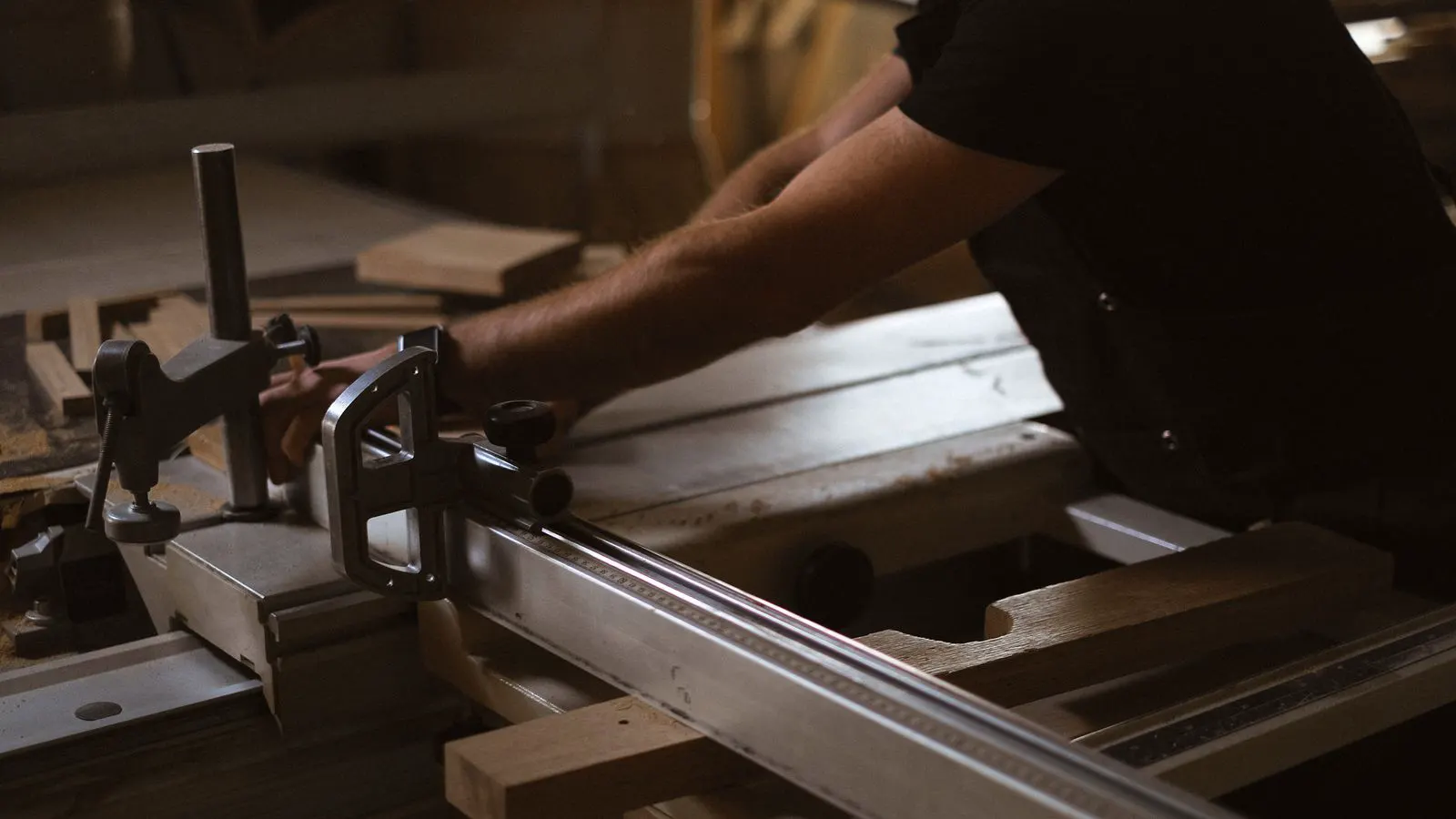
A practical example helps. Imagine a panel saw in a high-volume shop. The guard slides along a rail. The interlock switch sits on the rail. Every cut deposits fine dust on the rail. After months, the dust layer is thick enough that the guard does not fully press the switch. The machine refuses to start. The operator thinks the guard is broken. The guard is fine. The switch is just dirty.
This type of failure is easy to prevent. It requires regular cleaning and inspection. It also requires choosing a switch with a sealed housing if the shop environment is dusty.
In a typical shop layout, the guard mechanism is often accessible from the front or side. Technicians need clear sight lines to see the lever arm and the contact point. If the housing is opaque or recessed deep within the frame, cleaning becomes a chore. Operators skip the inspection. Dust accumulates. The first sign of trouble is a machine that requires three or four attempts to start.
Mechanical fatigue also affects the mounting hardware. The screws or bolts that hold the switch bracket to the saw frame can loosen. Vibration from the blade spinning at high speed works these fasteners loose. When the bracket shifts, the gap between the lever and the actuator changes. The switch no longer closes fully. The interlock trips even when the guard looks closed. Checking torque on these fasteners during quarterly maintenance catches this issue before it becomes a shutdown.
Electrical Faults That Stop the System
Electrical problems cause another class of saw guard interlock failure. The interlock switch sends a signal to the control board. If that signal is weak, noisy, or absent, the machine will not run.
Corrosion is a common culprit. Moisture in the shop air can settle on the switch terminals. It creates a conductive path that interferes with the signal. Oxidation on the contacts increases resistance. The switch may close, but the control board does not see a valid signal.
Loose wiring is another issue. Vibration from the saw can loosen the terminals. The wire may still be connected, but the connection is intermittent. The machine starts, then stops. Or it refuses to start until the operator jiggles the guard.
These electrical faults are harder to diagnose than mechanical ones. They can appear random. One day the guard works. The next day it does not. The problem is often in the wiring or the control board, not the guard itself.
Wiring harnesses routed near the blade area are vulnerable to heat and UV exposure from the shop lighting. The insulation can degrade over years. This creates a short circuit to the ground or an open circuit when the harness flexes with the guard movement. A multimeter test while moving the guard back and forth can reveal this intermittent break.
The control board itself can also fail. These boards manage the interlock status, the emergency stop circuits, and the motor drives. If the input relay on the board burns out, the machine ignores the switch entirely. The operator may think the guard is stuck, but the guard moves freely. Replacing the relay is a common repair, but it requires access to the electrical cabinet.
Sensor Types and Their Failure Modes
Different interlock sensors fail in different ways. Understanding these differences helps buyers choose the right system.
| Sensor Type | How It Works | Common Failure | Best For |
|---|---|---|---|
| Mechanical Limit Switch | Contact closes when guard is in place | Worn contacts, dust buildup | Standard panel saws |
| Proximity Sensor | Detects magnetic or metal object | Alignment drift, magnetic interference | High-precision setups |
| Magnetic Switch | Detects magnet on guard | Magnet loss, weak field | Simple guards |
| Optical Sensor | Detects broken light beam | Lens fouling, misalignment | Clean environments |
Mechanical limit switches are the workhorse. They are cheap and reliable if maintained. But they wear. Proximity sensors do not have moving parts in the switch itself. They do not wear from contact. But they are sensitive to alignment. If the guard moves out of position by a few millimeters, the sensor may not detect it.
Optical sensors are the most sensitive. A speck of dust on the lens blocks the beam. The machine stops. This is good for safety but bad for uptime.
In a dusty environment, proximity sensors often outlast mechanical switches because there is no contact surface to accumulate debris. However, the sensor housing can still get covered in a layer of fine powder. This layer can interfere with the magnetic or inductive field if the sensor is not properly sealed. Buyers should ask about the IP rating of the sensor housing. A higher rating indicates better protection against dust and water ingress.
Magnetic switches are simple but fragile. The magnet attached to the guard can lose its adhesive bond over time. If the magnet falls off, the switch sees the guard as open. The machine will not run. This failure is easy to spot. The magnet is missing. But it can be annoying to replace if the adhesive does not hold well in the heat of the shop.
How Failure Affects Sourcing Decisions
When selecting a saw, buyers must think about the guard system. The guard is not just a safety accessory. It is part of the machine’s control architecture.
If the shop has a high volume of small cuts, the guard moves constantly. A simple mechanical switch may wear out quickly. A proximity sensor may last longer. But it requires more precise installation.
If the shop has a dusty environment, sealed switches are necessary. Open switches will fail. The cost of a sealed switch is small. The cost of a failed machine is much larger.
If the shop has multiple operators, the interlock must be easy to use. A stiff guard or a weak spring makes the operator work harder. They may bypass the guard. This is a major safety risk.
Buyers should ask suppliers about the interlock system. What type of switch is used? Is it sealed? What is the expected service life? What is the recommended maintenance interval?
Sourcing decisions should also consider the availability of spare parts. If a saw uses a proprietary mechanical switch, finding a replacement can take weeks. Standard limit switches are available from most industrial supply houses. A proximity sensor might be harder to source if it is a specific frequency or brand. Ask about part numbers. If the supplier does not have a spare part in stock, the downtime risk is higher.
The physical layout of the guard matters too. A guard that is difficult to open and close will be bypassed by impatient operators. In a production environment, speed is often prioritized. If the guard requires two hands or significant force to lift, operators may find ways to disable it. A well-designed guard should lift smoothly with one hand. The interlock switch should actuate with a light touch. This design detail is often overlooked during the initial purchase but becomes a daily frustration in the shop.
Troubleshooting Common Interlock Problems
When a saw refuses to start, the first check is the guard. Is it in the correct position? If yes, the problem is likely in the interlock.
- Check the guard position. Ensure it is fully closed.
- Inspect the switch housing. Look for dust, chips, or debris.
- Test the switch manually. Press the lever. Listen for a click.
- Check the wiring. Look for loose terminals or corroded connections.
- Test the sensor with a multimeter. Verify the signal.
If the switch clicks but the machine does not start, the problem is likely electrical. If the switch does not click, the problem is mechanical.
A common mistake is replacing the guard. The guard is fine. The switch is dirty. Cleaning the switch solves the problem.
When troubleshooting, start with the simplest explanation. Verify that the emergency stop is not engaged. A tripped e-stop often looks exactly like an interlock failure. The machine will not start, and the guard may be in the correct position. Reset the e-stop. If the machine starts, the issue was not the interlock.
If the machine still does not start, isolate the circuit. Disconnect the interlock switch from the control board. Use a multimeter to check for continuity across the switch terminals. Close the guard. The meter should show continuity. Open the guard. The meter should show an open circuit. If the meter does not change state, the switch is defective.
If the switch works correctly, check the wire. Trace the wire from the switch to the control board. Look for breaks, pinched insulation, or loose crimps. Vibration can work a wire free from its terminal. The connection may look fine, but the wire is not making contact.
Preventing Interlock Failures
Prevention is cheaper than repair. A simple maintenance routine can prevent most saw guard interlock failure.
- Clean the guard and switch daily. Use a compressed air can or a soft brush.
- Inspect the switch weekly. Check for wear, corrosion, or loose connections.
- Lubricate moving parts monthly. Use a light machine oil.
- Check the wiring quarterly. Look for damage or loose terminals.
- Test the interlock monthly. Verify that the machine stops when the guard is opened.
This routine takes less than an hour per month. It prevents unexpected downtime. It also keeps the safety system effective.
For high-volume shops, this routine should be part of the preventive maintenance plan. It should be documented. The next operator should know what was done.
Documenting maintenance is critical for liability and insurance purposes. If an incident occurs, records showing regular inspection of safety devices are strong evidence of due diligence. Keep a log. Note the date, the technician, and the condition found. If a switch is replaced, record the part number. This information helps in future troubleshooting and sourcing.
Lubrication requires care. Do not use grease on the switch contacts. Grease attracts dust and creates a slurry that will clog the mechanism. Use a light oil on the pivot points of the guard itself, not on the electrical contacts. The contacts should remain dry and clean.
Final Thoughts on Guard Reliability
Saw guard interlock failure is not a mystery. It is a combination of wear, dirt, and electrical issues. Most failures are preventable.
Buyers should not treat the guard as an afterthought. It is a critical part of the machine. A reliable guard system protects the operator. It also protects the business from downtime.
When sourcing a saw, ask about the guard system. Choose a system that fits the shop environment. Choose a system that is easy to maintain.
A well-maintained guard is a simple thing. It works when you need it. It stops the machine when you need it to stop. That is all you need.
Frequently asked questions
Why does my saw not start when the guard is in place?
The interlock switch may be dirty, worn, or misaligned. Check the guard position and inspect the switch for debris or damage.
Can I bypass the guard interlock to save time?
No. Bypassing the interlock defeats the safety system. It creates a serious risk of injury. Always use the guard as intended.
How often should I inspect the guard interlock?
Daily cleaning is recommended. Weekly inspection of the switch and wiring is best. Monthly testing of the interlock function is necessary.
What is the difference between a mechanical and proximity interlock?
Mechanical switches use physical contacts. Proximity sensors detect a magnetic or metal object without contact. Proximity sensors last longer but are more sensitive to alignment.
How do I know if the interlock switch is bad?
Test the switch manually. If it clicks but the machine does not start, the switch or wiring may be faulty. If it does not click, the mechanism is jammed or worn.