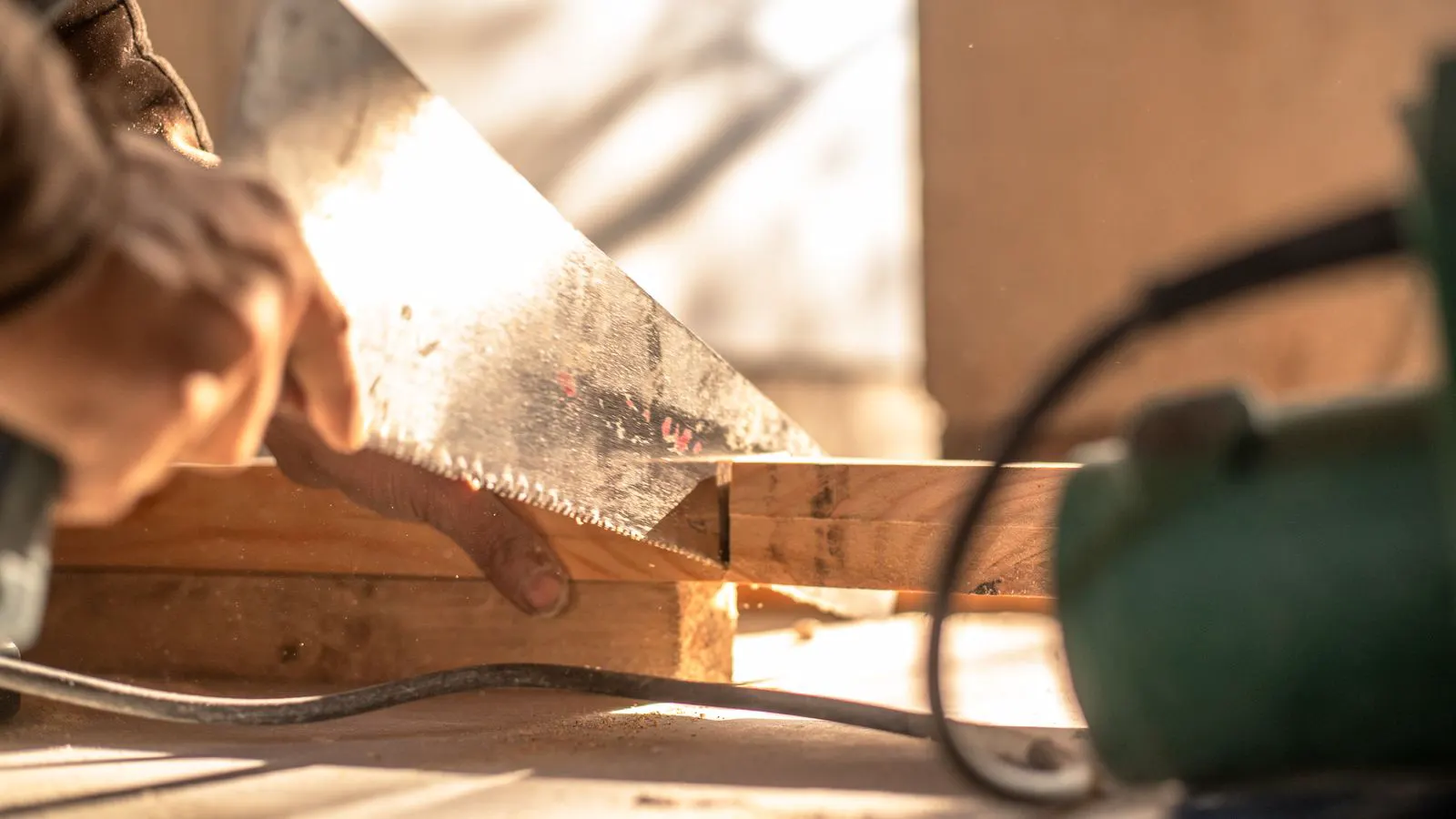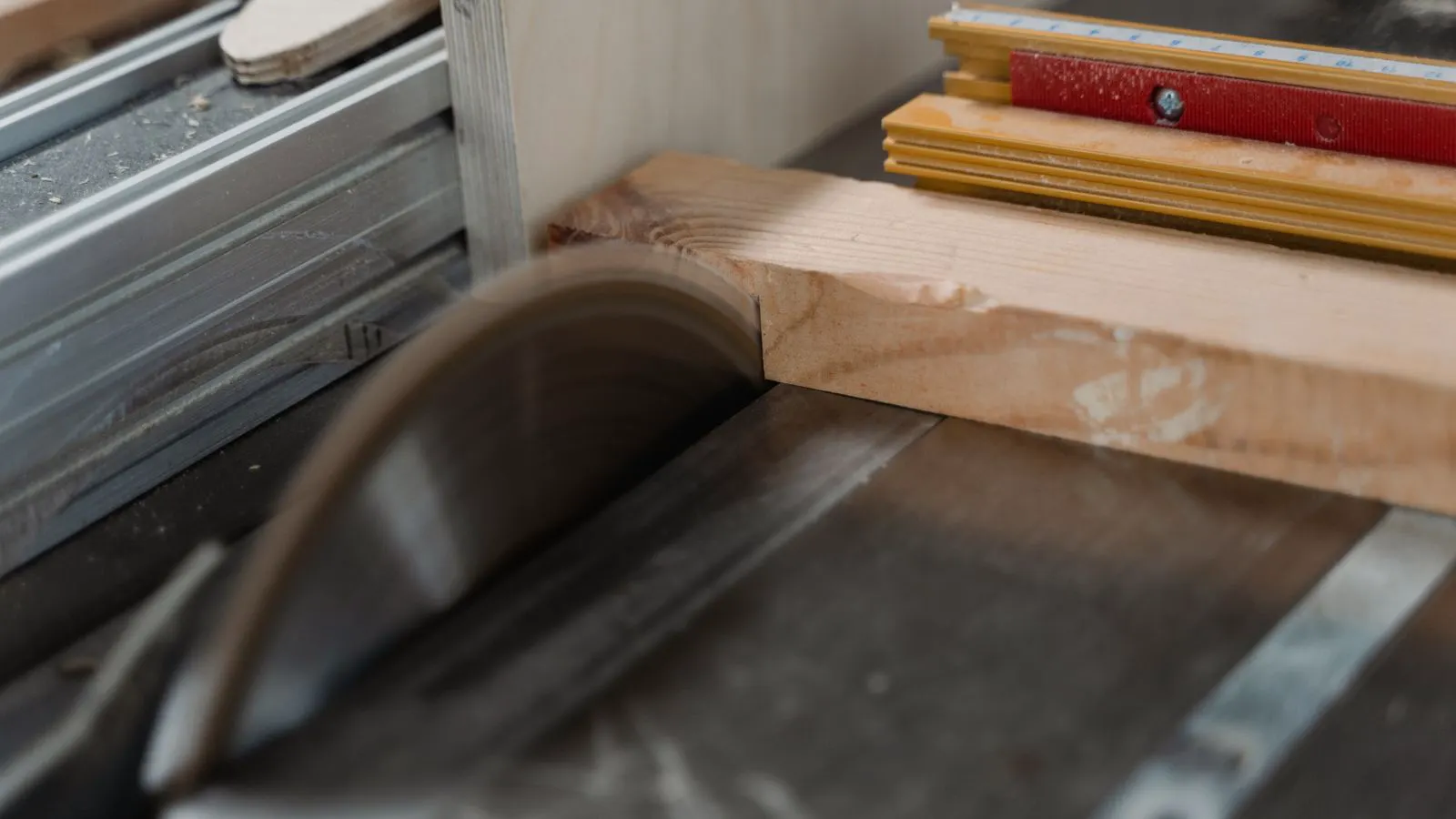
Choose the right circular saw blade by matching tooth count and kerf width to your material. Hardwoods need fewer teeth for speed, while fine work needs more teeth for smoothness.
- Match tooth count to the finish you need. More teeth give a cleaner cut but slower feed.
- Use a thin kerf blade for panel work to reduce binding and power draw.
- Check the arbor size and blade diameter before buying to ensure a safe fit.
Why the tooth count matters for your cut
The number of teeth on a circular saw blade sets the basic pace of the cut. Fewer teeth mean each tooth removes more material per revolution. This works well for softwoods and for ripping straight, fast cuts. The blade moves quickly through the wood, but the cut edge is rougher. The wood fibers are pulled apart before the blade can shear them cleanly, leaving a jagged surface that looks like a series of small steps when viewed closely.
More teeth mean smaller chips. The saw takes a longer time to complete each cut, but the surface it leaves behind is much smoother. This is the standard choice for crosscuts and finish work. The saw pulls the wood through slowly, producing less tear-out on the top surface. Each tooth engages a smaller section of the wood, allowing the cutting edge to slice the fibers rather than tearing them. The result is a surface that often requires only light sanding to prepare for finishing.
Selecting the right count depends on the task. A rough ripping blade might have twenty to forty teeth. A finish blade can have sixty to eighty or more. The difference is not just cosmetic. It changes how much power the motor must supply and how much vibration you feel in the handle. With fewer teeth, the blade generates less rotational inertia, allowing the motor to spin up faster. However, the larger chip load can cause the saw to stutter if the wood grain changes direction unexpectedly. With higher tooth counts, the motor must work harder to push the wood through, and the operator feels a distinct tug as the blade bites into the grain.
For example, ripping a two-by-four of pine with a twenty-tooth blade is a task that demands speed. The blade clears the board in seconds. The side of the board will look rough, but that is acceptable if the wood is destined for structural framing or if you plan to paint over the surface. Conversely, crosscutting a slab of cherry for a cabinet door with a twenty-tooth blade will produce an edge that is difficult to sand flat. The large chips leave deep grooves that trap dust and resist the sanding paper. Switching to a sixty-tooth blade on the same board changes the outcome. The cut becomes slower, and the operator must feed the wood through more steadily to prevent burning, but the resulting surface is clean enough to apply stain directly.
How kerf width affects power and binding
Kerf is the width of the slot the blade leaves in the workpiece. A standard kerf blade is usually around half an inch. Thin kerf blades are closer to a quarter inch. The difference is not just about how much wood you lose. It defines the mechanical relationship between the blade and the material it is cutting.
A wider kerf removes more material, which uses more motor power. It also creates a larger slot, which can cause the blade to bind if the cut does not finish cleanly. This is common in panel work or when cutting near the edge of a board. When the kerf is wide, the sides of the cut are further apart. If the wood fibers on one side are under tension and the fibers on the other side are under compression, the slot can narrow at the bottom. The blade then gets jammed inside the wood. The motor may stall, and the workpiece can kick back if the operator does not maintain pressure.
Thin kerf blades cut slower because each tooth has a smaller chip to push out. They draw less current and produce less vibration. This makes them a good fit for smaller saws or for cutting thin panels. The trade-off is that they wear faster in abrasive materials. The thin kerf creates a narrower slot for the chips to escape through. In dense or dusty materials, the chips can pack tightly in the kerf. This increases friction and heats the teeth.
For plywood and MDF, thin kerf blades are often the practical choice. The material is dense and can cause binding. A thin slot helps the blade pull through without catching. The reduced width of the slot means there is less surface area for the blade to contact the wood, which lowers the friction drag. This is particularly useful when cutting thin sheets, such as cabinet backs or drawer sides. A wide kerf blade on a thin sheet can cause the bottom layer to peel away from the top layer because the slot is too large for the material to support itself.
Consider a scenario where you are cutting a sheet of plywood that is half an inch thick. If you use a standard kerf blade, the slot is half an inch wide. The wood on either side of the cut is thin and flexible. As the blade rotates, the pressure from the teeth can squeeze the wood together, narrowing the slot. The blade may bind halfway through the cut. A thin kerf blade, with a slot width closer to the thickness of the veneer, allows the wood to remain separated. The blade slides through the slot with less resistance, and the cut completes cleanly.
Matching the blade to the material
Different woods and engineered panels behave differently under the teeth. Hardwoods like maple and oak are dense. They resist the cut and can cause the blade to heat up if you push too fast. The density of the wood means that the blades must work harder to shear the fibers. If the operator forces the saw through too quickly, the teeth cannot remove the chips fast enough. The heat builds up in the kerf, and the resin in the wood can stick to the teeth, dulling the edge.
Softwoods like pine and fir are easier to cut but can tear out if the blade is too fine. The fibers in softwoods are long and flexible. When a fine-toothed blade cuts through them, the fibers can lift before the blade has fully cut the grain. This results in a ragged edge on the top surface. A blade with fewer teeth is better suited for softwoods because it removes a larger chunk of wood, shearing the fibers more cleanly before they have time to lift.
Plywood has layers of veneer glued to a core. If the blade is not sharp or the tooth count is wrong, the top layer can peel back. This is called tear-out. A blade with a positive rake angle helps lift the top layer cleanly. Crosscut blades often have this shape. The rake angle is the angle at which the cutting edge is set relative to the plane of the blade. A positive rake angle allows the tooth to hook the top surface of the wood and pull it down as the blade cuts. This prevents the top veneer from being torn away by the upward force of the blade.
MDF and particleboard are abrasive. They contain resin and fine filler that dulls the teeth quickly. These materials also create dust that can clog the kerf. A blade with a positive rake angle helps clear the dust. You may need to replace the blade more often than you would for a solid wood project. The fine particles in MDF act like sandpaper, wearing down the hardened steel of the cutting edge. The dust generated by the cut is sticky and can adhere to the blade. If the kerf clogs, the blade cannot spin freely, and the motor draws excessive current.
For example, cutting a solid oak board and cutting a sheet of MDF require different approaches. The oak board requires a blade with a higher tooth count to achieve a smooth finish, but the density of the wood means the operator must feed the saw slowly to avoid burning. The MDF sheet requires a blade with a positive rake angle to prevent the top layer from chipping, but the abrasive nature of the material means the blade will dull faster. The operator must monitor the blade’s performance and replace it when the cut becomes rough or the motor sounds strained.
The role of the arbor and diameter
The arbor is the hole in the center of the blade where it mounts to the saw. It must match the saw’s arbor size exactly. A mismatch can cause the blade to wobble, vibrate, or even come off during operation. This is a safety issue as much as a performance one. The arbor size is typically measured in inches or millimeters and is stamped on the blade. Common sizes include one inch, one and one-eighth inches, and one and one-quarter inches. If the blade’s arbor is smaller than the saw’s arbor, it will not mount securely. The arbor nut will not seat properly, and the blade can shift during the cut. If the blade’s arbor is larger, it will not fit the saw’s spindle at all.
The diameter of the blade sets the maximum depth of cut. A larger blade can cut deeper but requires more power. A smaller blade is lighter and easier to control. It also cuts faster for shallow depths. The diameter is usually stamped on the blade as well, often near the arbor. Common diameters for circular saws include six inches, eight inches, ten inches, and thirteen and one-half inches. The diameter determines the radius of the cut and the amount of wood the blade can remove in a single pass.
When sourcing a blade, check the arbor size and the diameter. These numbers are usually stamped on the blade itself. If you buy a blade that is too large for your saw, it will not fit the guard. The guard is designed to cover the blade when it is not cutting. If the blade is larger than the guard allows, the operator cannot use the saw safely. The blade will protrude beyond the guard, exposing the teeth to the operator’s hand or the workpiece.
A common mistake is buying a blade that fits the hole but is too thick for the saw’s motor. The motor may struggle to spin the blade at full speed. This leads to a rough cut and excessive heat. Match the blade to the saw’s rated power. A large diameter blade on a small motor will cause the motor to overheat. The blade will not reach its optimal speed, and the cut will be slow and rough. The heat generated by the friction can warp the blade, causing it to vibrate. A vibrating blade is dangerous because it can kick back and throw the workpiece.
A worked example: cutting a hardwood table top
Imagine you are building a dining table from maple. You need to rip a long board down to width. You have a circular saw with a ten-inch blade. You want a straight cut, but you do not need a mirror finish. You will sand the edge later. The board is four inches wide and twelve inches long. The maple is dense and has a tight grain, which resists the cut.
A ripping blade with thirty to forty teeth is a good fit. It moves quickly through the dense maple. The cut is straight, and the edge is slightly rough, which is fine for sanding. The fewer teeth allow the blade to remove a larger chunk of wood per revolution, which reduces the time needed to complete the cut. The rough edge is acceptable because you plan to sand it smooth. The sanding will remove the jagged fibers and create a flat surface. You set the depth of cut to just past the table top thickness. This reduces the chance of the blade catching on the underside. The depth of cut is adjusted by the saw’s fence. You measure the thickness of the board and set the fence slightly above that measurement. This ensures that the blade does not contact the workbench or any support underneath the board.
If you were cutting the crosscut to make the table top the correct length, you would choose a different blade. A crosscut blade with sixty teeth would give a smoother end grain. It would take longer, but the edge would be cleaner. The higher tooth count allows the blade to shear the fibers more cleanly, resulting in a surface that is ready for finishing. You would set the depth of cut lower to avoid tear-out on the top surface. The lower depth of cut reduces the amount of wood the blade has to remove, which lowers the force required to pull the saw through. This reduces the chance of the blade kicking back or the workpiece shifting.
This example shows how one material can require two different blades. The material dictates the tooth count. The task dictates the blade type. The saw dictates the size. The maple board requires a ripping blade for the width cut and a crosscut blade for the length cut. The saw’s ten-inch diameter determines the maximum depth of cut, which limits the thickness of the board you can cut in a single pass. The arbor size of the blade must match the saw’s arbor to ensure a secure fit. By selecting the correct blade for each task, you can achieve a clean and accurate cut without overworking the saw or the operator.
Safety and maintenance checks
A circular saw is a powerful tool. A poorly chosen blade can be a safety hazard. Check the blade for nicks, cracks, or missing teeth before you use it. A damaged blade can vibrate violently and throw off the cut. Inspect the blade by holding it up to the light and looking for any dark lines or discoloration that may indicate a crack. Tap the blade gently with a wooden mallet to check for a dull sound, which can indicate a crack. If you find any damage, replace the blade immediately. Do not use a damaged blade, even if the damage appears minor.
Make sure the blade is mounted in the correct direction. The teeth should point away from you when the saw is on the ground. If they point the wrong way, the blade will not cut and can throw the workpiece back at you. The direction of the teeth is marked on the blade, usually with an arrow. The arrow should point in the direction of rotation when the saw is operating. If the blade is mounted in the wrong direction, the teeth will push the workpiece away from you, causing the saw to kick back. This can result in serious injury.
Keep the blade clean. Sawdust and resin can build up in the kerf. This causes friction and heat. Wipe the blade with a dry cloth after use. For abrasive materials, clean it more often. A dirty blade cuts poorly and wears faster. The dust and resin can pack into the kerf, causing the blade to bind. This can lead to the blade breaking or the motor stalling. Use a stiff brush to remove the dust from the kerf. Do not use a metal tool, as it can scratch the blade and dull the teeth.
Store the blade in a case or a protective sleeve. The teeth are sharp. If they contact the floor or other tools, they can chip. A chipped tooth changes the cutting action and can cause the blade to bind. The chip can catch on the wood or the saw’s guard, causing the blade to stop suddenly. This can throw the operator backward. Store the blade in a dry place to prevent rust. Rust on the blade can dull the teeth and cause the cut to become rough.
Final thoughts on sourcing
When you buy a circular saw blade, do not just look at the price. Look at the tooth count, the kerf width, the arbor size, and the material rating. A cheap blade that is not suited to your work will waste time and power. It will also wear out faster. The cost of a blade is a small fraction of the cost of the saw, but the right blade can extend the life of the saw and improve the quality of the cut.
For a professional shop, it is worth keeping a few different blades. A ripping blade for softwoods. A crosscut blade for finish work. A thin kerf blade for panels. This covers most tasks without over-specifying. The operator can select the blade based on the material and the task. The saw remains the same, but the blade changes to suit the job. This approach allows the operator to work efficiently and safely.
The right blade makes the cut easier. It protects the motor. It gives a cleaner edge. It reduces the risk of binding. Select the blade for the material and the task, not for the saw alone. The saw is the tool. The blade is the edge. By understanding the relationship between the blade and the material, you can make better choices and achieve better results. The blade is the part of the saw that touches the wood. It is the most important part of the cutting process.
Frequently asked questions
What is the best tooth count for plywood?
Sixty to eighty teeth is a good choice for plywood. It gives a smooth cut and reduces tear-out on the top layer.
Can I use a thin kerf blade for all cuts?
Yes, but it will be slower. Thin kerf blades are good for panels and small saws. For heavy ripping, a standard kerf blade may be more efficient.
How do I know if my blade is dull?
If the cut is rough and the saw is drawing more power than usual, the blade is likely dull. Check for a lack of sharpness on the teeth.
What is the difference between a crosscut and a ripping blade?
A crosscut blade has more teeth and is for smooth end grain cuts. A ripping blade has fewer teeth and is for fast, straight width cuts.
Do I need a different blade for MDF?
Yes. MDF is abrasive. Use a blade with a positive rake angle to clear dust and resin. Expect to replace it more often.